

Why Are Manufacturers Choosing Planetary Gearboxes for Automated Equipment?
2026-09-09
1. What Performance Gap Does a Planetary Gearbox Fill in Automation?
Automated equipment demands high precision, high repeatability, and high reliability over millions of cycles. A servo motor alone cannot deliver the required torque at the required speed without a transmission. The selection of the transmission determines whether the system can achieve its specified accuracy and whether it can maintain that accuracy over time. A Planetary Gearbox fills the gap between the motor and the load by providing a combination of high torque density, low backlash, and high efficiency. The torque-to-weight ratio of a Planetary Gearbox is significantly higher than that of a worm gear or a spur gear system. This means that for a given torque requirement, the planetary system is smaller and lighter. In our factory, we manufacture Planetary Gearbox units with backlash as low as 3 arc minutes, which is sufficient for most positioning applications without the cost premium of zero-backlash solutions.
Typical application scenarios where a Planetary Gearbox is chosen over alternatives:
• Robotic arms and articulated joints (lower cost than harmonic drives)
• Indexing tables and rotary turntables (higher stiffness than belt drives)
• Pick-and-place systems (better repeatability than spur gears)
• Conveyor drives (higher efficiency than worm gears)
• Machine tool feed drives (higher torque density than rack and pinion)
The decision to select a Planetary Gearbox is often driven by a combination of factors: the required positioning accuracy, the available space, the operating environment, and the total cost of ownership. At Saifu Vietnam Company Limited, we have seen a steady increase in demand from automation integrators who are moving away from harmonic drives for cost-sensitive applications and away from worm gears for efficiency-sensitive applications.
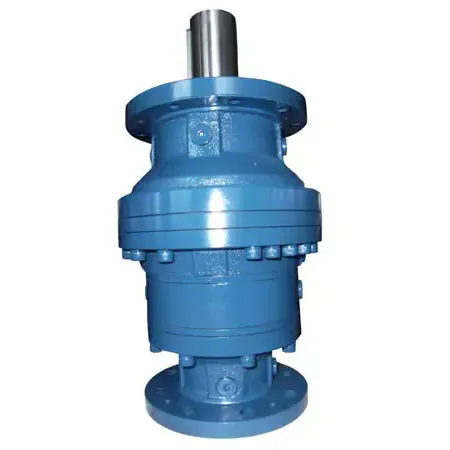
2. How Does a Planetary Gearbox Compare to Other Drive Train Options in Real Applications?
The comparison between drive train options is not a matter of one being superior in all aspects. Each technology has its strengths and weaknesses. The table below compares the key performance attributes of four common transmission types used in automated equipment. This is not a theoretical comparison; it is based on field data from our factory and from customer installations.
| Attribute | Planetary Gearbox | Harmonic Drive | Worm Gear | Spur Gear |
| Backlash (arc minutes) | 3 – 10 | 0 – 1 | 5 – 15 | 15 – 30 |
| Efficiency per stage | 95 – 97% | 85 – 90% | 70 – 85% | 92 – 95% |
| Torque density | High | Very high | Moderate | Moderate |
| Axial load capacity | High | Low | High | Moderate |
| Relative cost (1.0 = baseline) | 1.0 – 1.5 | 2.5 – 3.5 | 0.8 – 1.2 | 0.6 – 0.9 |
The trade-offs are clear. A harmonic drive provides zero backlash but at a higher cost and lower efficiency. A worm gear is self-locking, which is an advantage for some applications, but it has lower efficiency and higher backlash. A spur gear is the lowest cost option but has the highest backlash and lower torque density. The Planetary Gearbox sits in the middle: it offers good backlash performance (3 to 10 arc minutes), high efficiency, high torque density, and a moderate cost. For the majority of automated equipment applications, this is the optimal balance.
In our factory, we manufacture Planetary Gearbox units that are designed for specific automation applications. We offer both inline and right-angle configurations, with reduction ratios from 3:1 to 100:1. The housing is made of precision-machined steel or aluminum, and the gears are ground to ensure smooth operation and long life.
3. What Are the Hidden Costs That Favor Planetary Gearbox Selection?
The purchase price of a drive component is only the first layer of the cost structure. The total cost of ownership includes maintenance, downtime, replacement frequency, and energy consumption. In our experience, the hidden costs often favor the Planetary Gearbox. The high efficiency (95 to 97 percent per stage) reduces energy consumption compared to worm gears and harmonic drives. The robust design reduces the frequency of maintenance and the likelihood of unscheduled downtime. The lower cost compared to harmonic drives reduces the initial capital investment, which lowers the barrier to entry for automation upgrades. The table below shows a 5-year total cost of ownership comparison for a typical indexing table application.
| Cost component (5-year period) | Planetary Gearbox | Harmonic Drive | Worm Gear |
| Initial purchase cost | $800 | $1,800 | $600 |
| Installation and integration | $300 | $400 | $350 |
| Energy cost (at $0.12/kWh, 8,000 hours/year) | $350 | $480 | $550 |
| Maintenance and replacement parts | $200 | $350 | $400 |
| Downtime cost (estimated) | $150 | $250 | $300 |
| Total 5-year cost | $1,800 | $3,280 | $2,200 |
The Planetary Gearbox has a clear cost advantage over the harmonic drive and is competitive with the worm gear when the lower energy consumption and lower maintenance requirements are factored in. Saifu Vietnam Company Limited provides a lifecycle cost analysis with every gearbox quotation to help customers make informed decisions.
4. What Design Features Enable Higher Reliability in Continuous Duty Applications?
Automated equipment often operates continuously, with cycles measured in millions. The reliability of the drive train is a critical factor in the overall equipment effectiveness (OEE). A Planetary Gearbox has several design features that contribute to high reliability. The load is shared among multiple planet gears, which reduces the stress on individual gear teeth. This distributed load path results in longer gear life compared to a spur gear system. The planet gears also create a balanced force distribution, which reduces bearing loads and extends bearing life. In our factory, we use high-quality bearing materials and a fully sealed housing to prevent contamination. The sealing system keeps lubricant in and contaminants out, which is particularly important in dusty or wet environments.
Design decisions that matter for reliability:
• The use of case-hardened and ground gears (surface hardness 58-62 HRC)
• High-capacity bearings (rated for 2x the expected load)
• Low-friction seals (reduces heat generation)
• Precision-machined housing (maintains alignment over thermal cycles)
• Recommended lubrication schedule (based on operating cycles, not calendar time)
Saifu manufactures Planetary Gearbox units that are built to this standard. We have supplied gearboxes to packaging equipment manufacturers, material handling system integrators, and robotics companies. The feedback from these customers is consistent: the gearboxes perform reliably and require minimal maintenance over their service life.
Frequently Asked Questions About Planetary Gearbox Selection
Summary for Automation Equipment Buyers
The selection of a drive transmission is a critical decision in the design of automated equipment. A Planetary Gearbox offers a compelling combination of performance, reliability, and cost that makes it the preferred choice for a wide range of applications. It provides higher efficiency than worm gears, lower cost than harmonic drives, and better torque density than spur gears. The hidden costs—energy consumption, maintenance, and downtime—favor the planetary design. For manufacturers who are evaluating drive train options, the Planetary Gearbox is worth a close look.
Saifu Vietnam Company Limited manufactures Planetary Gearbox units that are designed for automation applications. We offer a full range of sizes, ratios, and configurations. Our engineering team can help you with selection, integration, and lifecycle cost analysis.