

Why Are Modified PTFE Gaskets Critical for High-Pressure Applications?
2026-04-09
In high-pressure service conditions across oil and gas, chemical processing, and power generation, sealing performance directly impacts plant safety, uptime, and regulatory compliance. Standard PTFE can struggle under extreme compressive loads, leading to cold flow, creep relaxation, and eventual leakage. That is why engineers increasingly specify Modified PTFE Gasket solutions designed to handle aggressive media, elevated temperatures, and high bolt loads without compromising dimensional stability. In ASME B16.5 flange systems and EN 1092-1 installations, gasket integrity must be consistent over long duty cycles, especially where fugitive emissions regulations apply.
From our field experience, our team has observed that improper gasket selection often results in premature maintenance shutdowns. At Ningbo Kaxite Sealing Materials Co., Ltd, we design materials that address these issues by enhancing creep resistance and improving load retention. Our factory applies controlled processing techniques to ensure uniform density and predictable sealing behavior. These improvements are essential where pressure cycling and thermal fluctuations are frequent.
How Does Material Modification Improve PTFE Performance Under Pressure?
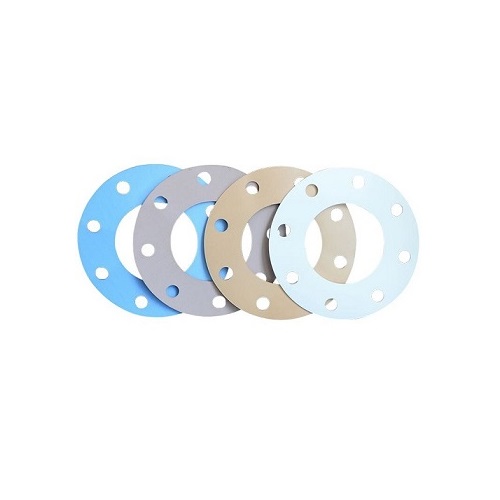
Material modification involves blending virgin PTFE with selected fillers such as glass fiber, carbon, graphite, or mineral compounds. These fillers significantly enhance compressive strength, reduce deformation, and stabilize the microstructure. As a result, a Modified PTFE Gasket maintains sealing stress longer than conventional PTFE, even under high bolt loads and dynamic conditions. This makes it suitable for refinery pipelines, steam systems, and aggressive chemical lines where dimensional recovery is critical.
Our engineering team carefully selects filler ratios to balance chemical resistance with mechanical strength. Our factory performs density calibration and stress relaxation testing to verify long-term performance. At Ningbo Kaxite Sealing Materials Co., Ltd, our production lines are optimized to ensure consistent sheet quality, which directly affects sealing reliability in industrial service.
| Property | Standard PTFE | Modified PTFE |
| Compressive Strength | Low | High |
| Creep Resistance | Moderate | Excellent |
| Thermal Stability | Good | Improved |
| Chemical Resistance | Excellent | Excellent |
| Service Life | Moderate | Extended |
What Technical Parameters Define High-Quality Gasket Performance?
When specifying sealing materials, engineers evaluate compressibility, recovery, tensile strength, and maximum operating pressure. A high-quality Modified PTFE Gasket must meet industry expectations for flange sealing, particularly in high-pressure piping networks. In our testing procedures, our team measures stress relaxation over time to ensure that bolt load is retained. This is essential in preventing leakage during long-term operation.
Our factory follows strict quality control standards, including ASTM and DIN testing protocols. Ningbo Kaxite Sealing Materials Co., Ltd maintains traceability for each production batch to ensure reliability in critical applications. Our engineers also evaluate compatibility with acids, alkalis, and hydrocarbons, ensuring that our materials perform consistently across diverse industrial environments.
| Parameter | Typical Value |
| Density | 2.1 to 2.3 g per cm3 |
| Temperature Range | -200 to 260 degrees Celsius |
| Pressure Resistance | Up to 150 bar depending on design |
| Compression Rate | 5 to 15 percent |
| Recovery Rate | 40 percent minimum |
Why Are These Gaskets Preferred in Oil, Gas, and Chemical Processing?
Industrial operators prioritize sealing solutions that minimize leakage risk and comply with environmental standards. A Modified PTFE Gasket is widely used in flange joints handling corrosive fluids, high-pressure steam, and volatile hydrocarbons. These applications demand stable sealing stress and resistance to chemical attack. Compared to elastomer-based materials, PTFE-based solutions offer superior durability in aggressive service environments.
Our experience shows that plant operators value materials that reduce maintenance intervals and support long-term operational stability. Our factory supplies gaskets that meet international expectations for performance and consistency. At Kaxite, our approach focuses on real-world application demands rather than theoretical specifications. Our solutions are engineered to perform under continuous pressure and temperature cycling, ensuring reliability in critical infrastructure.
How Can Proper Selection and Installation Improve Sealing Reliability?
Even the best material requires correct installation to achieve optimal sealing. Engineers must consider flange surface finish, bolt torque, and alignment. A properly installed Modified PTFE Gasket distributes stress evenly, preventing localized deformation and leakage paths. Lubrication, torque sequencing, and flange inspection all play essential roles in achieving a secure seal.
Our technical team supports customers with selection guidance based on operating pressure, temperature range, and media compatibility. Our factory also provides customized dimensions to match specific flange standards. By combining proper installation practices with high-performance materials, operators can significantly improve sealing efficiency and reduce downtime.
FAQ
Q1: Why are Modified PTFE Gasket materials better than standard PTFE in high-pressure systems?
Modified PTFE materials incorporate fillers that enhance mechanical strength and reduce creep deformation. This allows the gasket to maintain sealing stress over time, which is critical in high-pressure environments where standard PTFE may lose load and lead to leakage.
Q2: How do I choose the right gasket for a high-pressure flange connection?
Selection depends on operating pressure, temperature, and chemical exposure. Engineers should evaluate compressive strength, recovery rate, and compatibility with the process media. Consulting with experienced manufacturers ensures the material matches real operating conditions.
Q3: Can Modified PTFE Gasket solutions handle aggressive chemicals and high temperatures simultaneously?
Yes, these gaskets are designed to combine chemical resistance with thermal stability. They can operate across a wide temperature range while maintaining structural integrity, making them suitable for demanding industrial applications such as chemical processing and refinery systems.
Conclusion and Practical Next Steps
High-pressure sealing requires materials that deliver consistent performance under demanding conditions. By improving mechanical strength, reducing creep, and maintaining load retention, Modified PTFE Gasket solutions provide a reliable option for critical industrial systems. Our factory continues to refine material formulations to meet evolving industry requirements. If you are evaluating sealing solutions for high-pressure applications, our engineering team is ready to provide technical support, material recommendations, and customized specifications tailored to your project needs. Contact us today to discuss your requirements and receive a detailed quotation.