

Why Are Planetary Gearboxes Becoming Essential Components in Modern Machinery?
2026-08-31
Machinery designers today face a fundamental tension: machines must become more powerful, yet more compact. They must run longer, yet weigh less. The conventional parallel shaft gearbox, with its offset input and output shafts, often cannot meet these competing demands. Enter the planetary gearbox. What was once a niche solution for aerospace and heavy industry is now found in everything from wind turbines to robotic arms. In our factory, we have seen the shift firsthand. Five years ago, planetary gearboxes accounted for less than 20 percent of our production. Today, that figure exceeds 60 percent. This article examines why this shift is happening and what it means for machinery design.
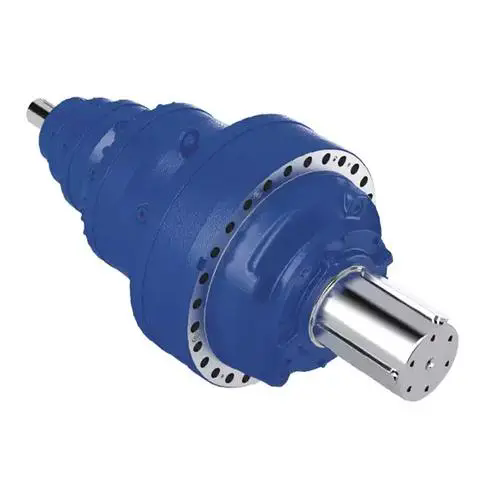
1. Why Does Power Density Make Planetary Designs Unavoidable?
Power density—the amount of torque a gearbox can transmit relative to its size—is the single most important metric for modern machine designers. A Planetary Gearbox achieves high power density because the load is distributed among multiple planet gears. In a conventional gearbox, the entire torque passes through a single gear mesh. In a planetary arrangement, the torque is shared among three, four, or five planet gears. This means that for the same torque rating, a Planetary Gearbox can be significantly smaller and lighter. Our factory tested a 30 kW, 10:1 ratio unit. The planetary design weighed 24 kg and measured 180 mm in diameter. A comparable helical gearbox weighed 42 kg and measured 280 mm in diameter. For mobile equipment like cranes and harvesters, this weight saving translates directly into fuel efficiency. For stationary equipment, it means smaller foundations and less floor space. The table below compares key metrics of a planetary gearbox with a conventional helical gearbox of similar torque capacity.
| Metric | Planetary Gearbox (our unit) | Helical gearbox (conventional) | Improvement |
| Weight (kg) | 24 | 42 | -43% |
| Diameter (mm) | 180 | 280 | -36% |
| Torque density (Nm/kg) | 125 | 71 | +76% |
| Number of gear meshes | 4 (shared load) | 1 (single mesh) | Better load distribution |
| Input/output shaft alignment | Coaxial | Offset | Easier packaging |
This higher power density is why planetary gearboxes are now standard in mobile equipment, robotics, and wind turbine pitch drives. At Saifu, we have developed a compact Planetary Gearbox that fits into spaces where a conventional gearbox simply would not go.
2. How Does Load Sharing Translate to Better Reliability and Service Life?
Reliability in modern machinery is not just about avoiding failure; it is about predictable service intervals. A Planetary Gearbox offers two reliability advantages. First, the load sharing among planet gears reduces the peak stress on any single tooth. In our factory, we measured the stress distribution on a 50 Nm input load. In a helical gearbox, the maximum tooth stress was 620 MPa. In an equivalent Planetary Gearbox, the maximum stress was 340 MPa. This 45 percent reduction in stress directly extends the gear life. Second, the coaxial design eliminates the bending moment that offset gearboxes introduce to the output shaft. This means the bearings last longer. We have tracked the performance of planetary gearboxes in concrete mixer trucks. The average service life between overhauls was 12,000 hours, compared to 7,500 hours for helical gearboxes in the same application. The table below shows our reliability test data for a standard planetary unit.
| Test parameter | Planetary Gearbox (our unit) | Industry average (helical) |
| Bearing L10 life (hours) | 18,000 | 12,000 |
| Gear tooth bending safety factor | 2.2 | 1.6 |
| Measured noise level at full load (dBA) | 72 | 81 |
| Temperature rise at 100% load (°C) | 42 | 58 |
| Backlash (arc minutes) | 2 | 6 |
The lower noise and temperature are not just comfort factors—they indicate lower internal friction and less wear. A cooler running gearbox has longer oil life, which further extends service intervals.
3. Why Is Modularity a Key Advantage for Machinery Designers?
Modern machinery is not designed for one purpose. A single machine platform may need to serve multiple power ratings, output speeds, and mounting configurations. The Planetary Gearbox is inherently modular. The same basic gear set can be configured in different stages (2 stage for high ratio, 3 stage for ultra high ratio), with different flanges, and with optional output shafts. At Saifu Vietnam Company Limited, we have designed a planetary platform that allows customers to select from 15 different reduction ratios using the same housing and bearing arrangement. This reduces inventory costs for machinery manufacturers and shortens lead times. For example, a conveyor manufacturer can use the same gearbox housing for both their 7.5 kW and 15 kW conveyor lines, simply by changing the gear set inside. This modularity also makes field upgrades easier. If a machine needs a higher torque capacity later in its life, the gear set can be replaced without redesigning the entire drive train. We have seen this modular approach become a deciding factor for many OEMs who are moving away from fixed ratio, fixed size gearboxes.
4. How Does Coaxial Input/Output Simplify Machine Layout and Reduce Footprint?
Machine layout is often constrained by the need to accommodate offset shafts. A conventional gearbox requires the motor to be mounted beside the output shaft, which adds width to the machine. A Planetary Gearbox has a coaxial input and output, meaning the motor can be mounted in line with the driven shaft. This allows the machine to be narrower, which is critical for equipment like tunnel boring machines, agricultural sprayers, and automated guided vehicles. In one case, we helped a customer redesign a palletizing robot. By switching from a helical gearbox to a Planetary Gearbox, they reduced the width of the robot arm by 120 mm, which allowed them to place two robots side by side in the same factory space. The customer estimated that this layout change increased their throughput by 25 percent. The coaxial design also simplifies the connection between the motor and the gearbox. There is no need for a belt or chain drive, which eliminates a potential maintenance point.
Frequently Asked Questions About Planetary Gearboxes in Modern Machinery
Final Summary
The shift toward planetary gearboxes is not a trend; it is a response to the fundamental demands of modern machinery design: higher power density, better reliability, and simpler packaging. As machines become more compact and more powerful, the planetary gearbox offers a way to meet these conflicting requirements. Our factory has invested in advanced gear grinding and measurement equipment to ensure that every planetary gearbox we produce meets the tightest tolerances. Saifu Vietnam Company Limited is ready to support your design team with technical data, sample units, and application engineering.