

Why Are Planetary Reducers Used in High Load Industrial Applications?
2026-09-15
In a high load industrial application, the reducer is often the first component to fail. A conveyor drive, a mixer gearbox, or a crane hoist that is subjected to continuous heavy loads will eventually show signs of gear pitting, bearing spalling, or shaft fatigue. The question is not whether the reducer will fail, but when. A Planetary Gearbox is designed to delay that failure by distributing the load across multiple gear meshes. Instead of a single gear tooth carrying the entire torque, the load is shared by three, four, or even six planet gears. This load sharing is the fundamental reason why planetary reducers are preferred in high load applications. This guide explains the mechanism and the selection parameters that matter most.
1. How Does Load Sharing in a Planetary Gearbox Increase Torque Capacity?
In a conventional parallel-shaft reducer, the torque is transmitted through a single gear mesh. The entire load is carried by one pair of gear teeth. In a Planetary Gearbox, the torque is transmitted through multiple planet gears that mesh with a central sun gear and an outer ring gear. The load is divided equally among the planets. If there are four planets, each planet carries approximately one quarter of the total load. This load sharing has two effects. First, it reduces the stress on each gear tooth, which increases the bending and contact fatigue life. Second, it allows the use of smaller gears for the same torque, which reduces the size and weight of the reducer.
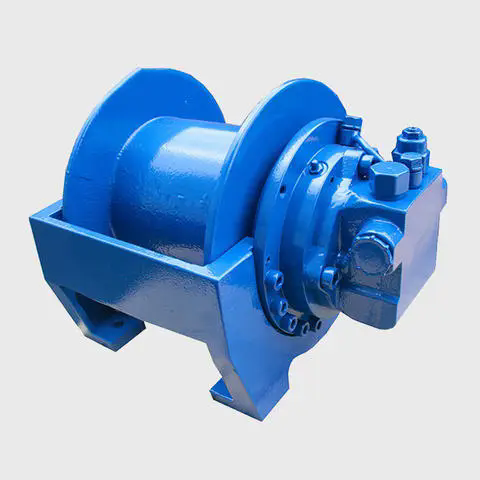
The table below compares the torque capacity of a parallel-shaft reducer and a planetary reducer of similar size.
| Parameter | Parallel-shaft reducer | Planetary Gearbox (4 planets) |
| Rated output torque (Nm) | 1,200 | 4,800 |
| Ratio | 20:1 | 20:1 |
| Gear module (mm) | 4.0 | 2.5 |
| Housing diameter (mm) | 280 | 220 |
| Weight (kg) | 65 | 38 |
| Torque density (Nm/kg) | 18.5 | 126.3 |
The torque density of the planetary design is nearly seven times higher than the parallel-shaft design. This is why a Planetary Gearbox can be used in applications where space and weight are critical, such as mobile machinery, robotics, and aerospace. In our factory, we manufacture planetary gearboxes with torque capacities ranging from 500 Nm to over 50,000 Nm.
2. What Role Does the Ring Gear and Planet Carrier Design Play in High Load Applications?
The ring gear and the planet carrier are the two most highly stressed components in a Planetary Gearbox. The ring gear must withstand the combined radial forces from all the planet gears. It is typically made from a high-strength alloy steel and is case-hardened to a surface hardness of 58 to 62 HRC. The planet carrier must transmit the torque from the planet pins to the output shaft. It is subjected to bending and torsional loads. A weak carrier design will flex under load, causing misalignment of the planets and uneven load sharing. In our factory, we use finite element analysis to optimize the carrier design for stiffness and strength. The table below shows the material and heat treatment specifications for these components.
| Component | Material | Heat treatment | Surface hardness | Core hardness |
| Sun gear | 20MnCr5 | Carburizing | 58 – 62 HRC | 30 – 35 HRC |
| Planet gears | 20MnCr5 | Carburizing | 58 – 62 HRC | 30 – 35 HRC |
| Ring gear | 42CrMo4 | Nitriding | 60 – 65 HRC | 28 – 32 HRC |
| Planet carrier | 42CrMo4 | Quenching and tempering | 280 – 320 HB | 280 – 320 HB |
| Planet pins | 20MnCr5 | Carburizing | 58 – 62 HRC | 30 – 35 HRC |
The ring gear is often the limiting component in high load applications. We use a nitriding process for the ring gear because it produces a harder surface without the distortion that can occur during carburizing. This ensures that the ring gear maintains its geometry under heavy loads. Saifu Vietnam Company Limited has been manufacturing planetary gearboxes for over 15 years and supplies to industries including mining, steel, and material handling.
3. How Do Bearings and Shafts Affect the Load Capacity of a Planetary Gearbox?
The bearings and shafts in a Planetary Gearbox must support the radial and axial loads that are transmitted through the gears. In high load applications, the bearings are often the limiting factor for the service life of the reducer. We use high-capacity cylindrical roller bearings for the planet gears and tapered roller bearings for the output shaft. These bearings are selected based on the L10 life calculation, which predicts the number of revolutions that 90 percent of a group of identical bearings will complete before the first sign of fatigue. For high load applications, we design for an L10 life of at least 20,000 hours. The output shaft is made from 42CrMo4 and is quenched and tempered to a hardness of 280 to 320 HB. The shaft diameter is sized to keep the torsional stress below 60 MPa and the bending stress below 80 MPa.
Bearing selection for high load: The planet gear bearings are the most critical. We use a full complement cylindrical roller bearing with a high dynamic load rating. This bearing can support the radial load from the gear mesh and the centrifugal force from the planetary motion. The bearing clearance is set to C3 to accommodate thermal expansion during operation.
4. What Are the Key Selection Parameters for a Planetary Gearbox in a High Load Application?
When selecting a Planetary Gearbox for a high load application, the engineer must consider five parameters: the rated output torque, the peak torque, the radial load at the output shaft, the duty cycle, and the desired service life. The rated torque is the continuous torque that the gearbox can transmit without exceeding the thermal limit. The peak torque is the maximum torque that the gearbox can withstand for a short duration without damage. The radial load is the force that the output shaft must support, which is often determined by the drive arrangement (e.g., a belt or chain drive). The duty cycle is the percentage of time that the gearbox operates at full load. The service life is the desired number of operating hours before replacement. The table below shows the selection parameters for three common high load applications.
| Application | Rated torque (Nm) | Peak torque (Nm) | Radial load (kN) | Duty cycle | Service life (hours) |
| Conveyor drive (mining) | 8,000 | 16,000 | 25 | 80% | 30,000 |
| Mixer drive (chemical) | 5,000 | 10,000 | 15 | 60% | 40,000 |
| Crane hoist (port) | 12,000 | 24,000 | 40 | 40% | 20,000 |
In our factory, we use a proprietary selection software that matches the gearbox to the application based on these parameters. We also provide a service factor of at least 1.5 for high load applications, which means that the gearbox is selected with a torque capacity that is 50 percent higher than the calculated load. This provides a margin of safety for unexpected overloads.
Frequently Asked Questions About Planetary Gearboxes in High Load Applications
Summary for Drivetrain Engineers
Planetary Gearbox units are used in high load industrial applications because they distribute the load across multiple gear meshes, which increases the torque capacity and reduces the size and weight of the reducer. The ring gear, planet carrier, and bearings are the critical components that determine the load capacity and service life. The selection of a planetary gearbox for a high load application requires careful consideration of the rated torque, peak torque, radial load, duty cycle, and service life. Saifu Vietnam Company Limited has been manufacturing Planetary Gearbox units for over 15 years and supplies to industries worldwide.
Saifu Vietnam Company Limited manufactures Planetary Gearbox units with torque capacities up to 50,000 Nm. We provide full selection support, including service factor calculation and bearing life analysis.