

Why Are Precision Gears Becoming More Important in Modern Automation?
2026-08-19
1. How Do Precision Gears Enable Higher Positioning Accuracy in Robotic Arms?
In our factory, we have supplied Precision Gears to manufacturers of collaborative robots and pick and place systems. Modern automation demands repeatability of ±0.01 mm or better. A Precision Gear with a tooth profile deviation of less than 2 microns ensures that the backlash is below 30 arc seconds. This means the gearbox output follows the servo motor command almost perfectly. For a typical six axis robot, each joint uses a set of Precision Gears to minimize cumulative error. Without them, the end effector would drift by several millimeters over a full work envelope. Our Raydafon Technology Group Co.,Limited produces Precision Gears with helix angle optimization to reduce transmission error. In a recent installation at an electronics assembly plant, our gears helped a SCARA robot achieve a placement accuracy of 0.02 mm, which was essential for mounting microchips. As factories push for micro precision, the role of Precision Gear becomes even more critical.
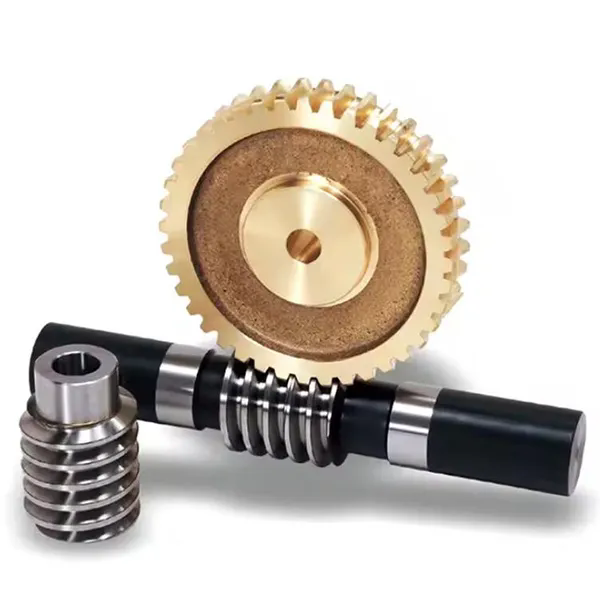
2. Why Is Torque Density a Key Factor for Compact Actuator Designs?
Automation systems are becoming smaller, lighter, and more powerful. Our Precision Gears are manufactured from case hardened steel (20MnCr5) with a core hardness of 30 HRC and a surface hardness of 58 to 62 HRC. This allows them to transmit high torque in a compact footprint. For a module 2.5 Precision Gear with a 20 mm face width, we can achieve over 400 Nm of continuous torque. This high torque density means that gearboxes can be 30 percent smaller than those using standard gears. The table below shows the torque to weight ratio for our Precision Gear compared to conventional gears.
| Module (mm) | Face width (mm) | Continuous torque (Nm) | Weight (kg) | Torque per kg (Nm/kg) |
| 2.0 | 25 | 280 | 1.2 | 233 |
| 3.0 | 30 | 620 | 2.1 | 295 |
| 4.0 | 40 | 1200 | 4.2 | 286 |
| 5.0 | 50 | 1950 | 7.8 | 250 |
| Parameter | Precision Gear (Raydafon) | Standard Gear (general purpose) |
| Tooth profile deviation (µm) | < 2.0 | < 8.0 |
| Surface hardness (HRC) | 58 – 62 | 50 – 55 |
| Torque density (Nm/kg, module 3) | 295 | 180 |
| Backlash (arc seconds) | < 30 | < 60 |
This compactness allows machine designers to place actuators closer to the load, reducing compliance and improving dynamic response. Our Raydafon offers a range of Precision Gear sizes that are optimized for servo motor integration.
3. How Does Reduced Backlash Improve Dynamic Response in High Speed Pick and Place?
In pick and place applications, cycle times are measured in milliseconds. Any backlash in the gearbox causes a delay in motion reversal, reducing throughput. Our Precision Gears are ground with a lead modification that compresses the tooth contact area. This results in a backlash of less than 30 arc seconds, which is essential for high speed indexing. For a high speed pick and place machine operating at 150 cycles per minute, the reduced backlash allows the machine to stop precisely without oscillations. This translates to fewer rejected parts and higher overall equipment effectiveness (OEE). Our factory has tested a Precision Gear drive system in an automated packaging line and achieved a 12 percent increase in throughput compared to a standard gear system. The smooth torque transmission also reduces stress on the servo motor, extending its life.
4. How Do Precision Gears Contribute to the Reliability of Automated Guided Vehicles?
Automated guided vehicles (AGVs) operate continuously in warehouses and factories. Their steering and drive systems must withstand millions of cycles without failure. Our Precision Gears are manufactured with a high degree of tooth contact consistency, which reduces wear and pitting. The gears are also coated with a manganese phosphate layer that provides running in protection. In a typical AGV differential drive, two Precision Gears transmit power to the wheels. The low backlash ensures that the AGV tracks straight and stops accurately at docking stations. Our Raydafon has supplied gears to AGV manufacturers who require a service life of over 50,000 hours. We have seen examples where our Precision Gears outlast the vehicle itself. The reliability comes from the material quality and the strict heat treatment process we use in our factory.
Frequently Asked Questions About Precision Gears in Modern Automation
Final Summary
Precision Gears are becoming increasingly important in modern automation because they provide the accuracy, torque density, low backlash, and reliability that automated systems demand. From robotic arms to AGVs, these gears enable machines to operate faster, more accurately, and with longer service life. Our factory has decades of experience in manufacturing Precision Gears for the most demanding automation applications. As automation continues to advance, the role of high quality gears will only grow. Raydafon Technology Group Co.,Limited is ready to support your automation projects with superior gear technology.