

Why Are Shaft Collars Widely Used in Conveyor and Automation Systems?
2026-05-11
Shaft Collars are fundamental components in conveyor and automation systems. Their primary purpose is to secure, position, and space mechanical components on a shaft. This simple yet crucial role allows for precise alignment of bearings, sprockets, pulleys, and gears. Our engineers at our factory have observed that even a minor misalignment in conveyor assemblies can lead to premature wear or operational inefficiencies.
Using a high-quality Shaft Collar reduces assembly time, ensures consistent positioning, and facilitates modular system adjustments. Raydafon Technology Group Co.,Limited supplies collars that meet tight tolerance standards suitable for heavy-duty and high-speed industrial applications.
Why Are Different Shaft Collar Types Used for Specific Conveyor and Automation Systems?
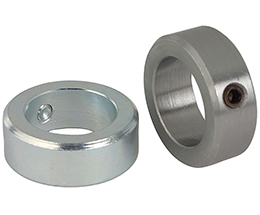
Shaft Collars are available in several styles including set screw collars, clamping collars, and one-piece split collars. Set screw collars are cost-effective for light loads, while clamping collars provide uniform pressure and are ideal for high-torque or repeated assembly. Split collars simplify installation and maintenance without shaft disassembly.
Our factory produces precision Shaft Collar designs tailored for linear guides, actuator shafts, conveyor rollers, and robotic arms. Our material selection ensures resistance to corrosion, wear, and thermal expansion. The flexibility in design allows our clients to implement modular automation systems efficiently.
| Type | Material | Application | Torque Capacity |
| Set Screw Collar | Carbon Steel, Stainless Steel | Light duty positioning | Up to 20 Nm |
| Clamping Collar | Aluminum, Stainless Steel | High torque and repeatable assembly | Up to 120 Nm |
| Split Collar | Steel, Stainless Steel | Easy maintenance and replacement | Varies with shaft size |
How Do Shaft Collar Specifications Impact Conveyor System Efficiency?
The diameter, width, and material grade of a Shaft Collar directly influence the performance and longevity of conveyor and automation equipment. Selecting an accurate diameter ensures a snug fit without shaft damage, while width and material grade control axial load distribution. Our production process emphasizes dimensional consistency and surface finish for every Shaft Collar we manufacture.
Raydafon Technology Group Co.,Limited implements strict quality control in our factory, including hardness testing, torque evaluation, and corrosion resistance analysis to ensure reliability across different conveyor applications.
| Parameter | Standard Range | Notes |
| Inside Diameter | 6 mm to 100 mm | Customized tolerances available |
| Width | 6 mm to 30 mm | Depends on load and shaft application |
| Material Hardness | HRC 40-60 (Steel) | Determined by load requirement |
| Surface Treatment | Phosphate, Zinc, Anodized | Prevents corrosion and wear |
| Shaft Fit | H7 to g6 tolerance | Precision for minimal play |
Why Do Maintenance Teams Rely on Shaft Collars for Automation Systems?
Routine maintenance and system reconfiguration are simplified with clamping and split Shaft Collars. Our factory observes that these designs reduce downtime, allowing engineers to reposition or remove components without full shaft disassembly. Shaft Collar selection directly impacts the speed and safety of maintenance operations.
Raydafon Technology Group Co.,Limited provides guidance on selecting collars that meet both operational and maintenance efficiency requirements. Our team works closely with customers to optimize installation procedures and minimize operational interruptions.
What Are Common Questions About Shaft Collars in Conveyor Applications?
Q1: How do I choose the right Shaft Collar for high-speed conveyors?
A1: Consider material strength, clamping mechanism, and torque capacity. Clamping collars are recommended for high-speed conveyors due to uniform pressure and minimal shaft damage. Ensure diameter tolerance matches the shaft for secure positioning.
Q2: Can Shaft Collars be reused after disassembly?
A2: Split and clamping collars are reusable and maintain reliability after removal. Set screw collars may develop indentation marks, reducing repositioning accuracy. Our factory recommends inspecting torque settings and surface finish before reuse.
Q3: What maintenance practices extend Shaft Collar service life?
A3: Regularly check torque levels, inspect for corrosion, and clean mating surfaces. Avoid over-tightening set screws, and apply protective coatings if the system is exposed to moisture or chemicals. Following these steps ensures consistent conveyor and automation performance.
Why Should Companies Source Shaft Collars from a Trusted Supplier?
High-quality Shaft Collars minimize system errors, prevent unplanned downtime, and improve equipment lifespan. Our factory emphasizes precision manufacturing, material traceability, and consistent batch quality. Working with Raydafon Technology Group Co.,Limited ensures access to professional technical support and custom specifications for every application.
Our engineers assist with sizing, material selection, and production scheduling. Whether your project requires clamping, split, or set screw Shaft Collar solutions, our factory can deliver reliable, cost-effective products to meet industrial standards.
Contact us today to discuss your conveyor or automation system requirements. Our team will provide expert recommendations and prompt quotations tailored to your project needs.