

Why Are Spiral Wound Gaskets the Preferred Choice for Oil and Gas Applications?
2026-03-12
What Makes Spiral Wound Gaskets Ideal for High-Pressure Oil and Gas Systems?
In oil and gas operations, pressure fluctuations and temperature extremes demand reliable sealing solutions. Our Spiral Wound Gaskets provide exceptional resilience under these conditions. Manufactured with precision at Ningbo Kaxite Sealing Materials Co., Ltd, our gaskets combine a stainless steel winding with flexible filler materials, ensuring a tight seal even under thermal cycling. Our engineers have optimized the winding density and filler composition to prevent leakage and maintain structural integrity over extended periods. By using our Spiral Wound Gaskets, operators reduce maintenance costs and prevent unscheduled shutdowns, which are critical in high-stakes oilfield environments.
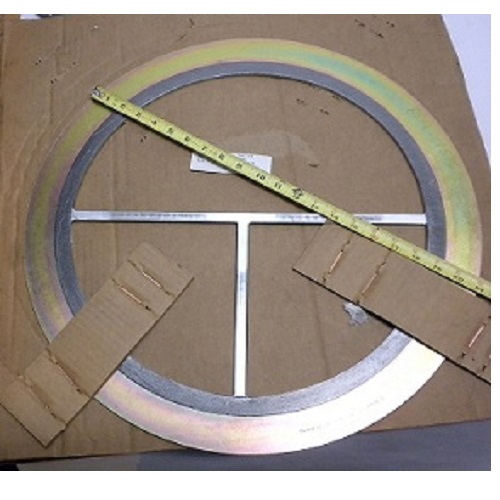
How Do Material Choices Impact the Performance of Spiral Wound Gaskets?
The choice of materials directly affects the gasket's durability and chemical resistance. Our factory produces Spiral Wound Gaskets using 304 and 316 stainless steel for the windings and graphite or flexible PTFE as fillers, depending on the application. Graphite provides excellent thermal and chemical resistance, making it suitable for high-temperature pipelines, whereas PTFE ensures compatibility with aggressive chemicals. Our careful selection ensures that our Spiral Wound Gaskets meet industry standards such as ASME B16.20 and API 601, providing peace of mind for operators handling corrosive or high-temperature fluids.
| Gasket Type | Winding Material | Filler Material | Temperature Range | Pressure Rating |
| Standard Spiral Wound | 304 SS | Graphite | -50°C to 550°C | Class 1500 |
| High-Performance Spiral Wound | 316 SS | PTFE | -200°C to 260°C | Class 2500 |
Why Is Dimensional Accuracy Crucial for Spiral Wound Gaskets?
Precision in gasket dimensions ensures a proper fit between flanges and prevents leak paths. Our Spiral Wound Gaskets are manufactured with tight tolerances using automated winding machines at Ningbo Kaxite Sealing Materials Co., Ltd. The inner diameter, outer diameter, and thickness are verified using laser measurement tools. Dimensional consistency guarantees that our gaskets achieve maximum compression and conform to flange irregularities, which is essential for maintaining a reliable seal in pipelines transporting crude oil, natural gas, or refined products.
How Can Our Spiral Wound Gaskets Reduce Maintenance and Downtime?
Frequent maintenance and unexpected failures are costly in oil and gas operations. Our Spiral Wound Gaskets are engineered to withstand thermal cycling, vibration, and fluctuating pressures. By maintaining elasticity and structural integrity over long periods, our products minimize the need for frequent inspections. Ningbo Kaxite Sealing Materials Co., Ltd ensures that each gasket undergoes rigorous quality control tests including leakage tests and mechanical stress simulations. By choosing our Spiral Wound Gaskets, facilities experience fewer shutdowns, improved safety, and optimized operational efficiency.
| Application | Operating Temperature | Maximum Pressure | Material Combination |
| Crude Oil Pipelines | -40°C to 500°C | 2500 psi | 316 SS + Graphite |
| Refinery Units | -50°C to 550°C | 1500 psi | 304 SS + Graphite |
| Gas Processing Lines | -20°C to 260°C | 2000 psi | 316 SS + PTFE |
FAQ
Q1: Why are Spiral Wound Gaskets preferred over flat ring gaskets in oil and gas pipelines?
A1: Spiral Wound Gaskets provide superior resilience under high pressure and temperature fluctuations. Their combination of metal winding and flexible filler ensures consistent sealing performance even in thermal cycling conditions, reducing leak risks compared to flat ring gaskets.
Q2: Can our Spiral Wound Gaskets handle corrosive fluids and extreme temperatures?
A2: Yes, by selecting appropriate winding materials such as 316 stainless steel and fillers like graphite or PTFE, our Spiral Wound Gaskets are resistant to chemical corrosion and can operate reliably across a wide temperature range, ensuring safety and longevity in aggressive oil and gas environments.
Q3: How does proper installation affect the lifespan of Spiral Wound Gaskets?
A3: Correct flange alignment and torque application are essential. Our factory provides detailed installation guidelines to ensure the gasket compresses evenly, prevents deformation, and maintains sealing performance over long periods, ultimately reducing maintenance costs and preventing unplanned downtime.
Conclusion
Our Spiral Wound Gaskets are engineered to meet the stringent demands of the oil and gas industry. With carefully selected materials, precision manufacturing, and rigorous testing, our products ensure reliable sealing, reduced maintenance, and extended service life. At Ningbo Kaxite Sealing Materials Co., Ltd, we prioritize quality and performance to support your critical operations. Contact us today to discuss how our Spiral Wound Gaskets can optimize your pipeline systems and enhance operational safety.