

Why Do Concrete Blocks Crack and How to Prevent It
2026-04-23
Why Do Concrete Blocks Crack During Production and Storage?
Concrete block cracking is one of the most common quality issues in masonry manufacturing. It can appear as hairline shrinkage marks, corner fractures, edge breaks, or full structural splits. In many plants, these defects increase reject rates, waste raw materials, and slow delivery schedules. For producers supplying contractors, distributors, and public works projects, cracking can also damage reputation.
The root cause is rarely one single factor. Most failures come from a combination of poor aggregate grading, unstable moisture content, weak compaction, over-fast curing, or rough handling after demolding. Our production teams often find that operators focus only on cement ratio while ignoring vibration consistency and pallet stability. That is where modern automation changes results.
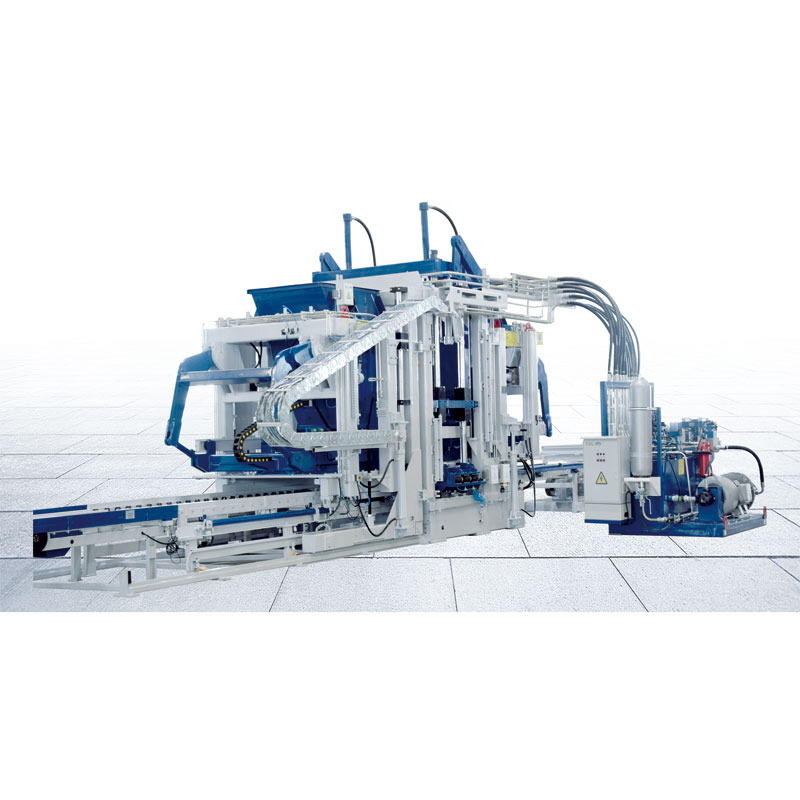
Using a properly configured QGM Block Making Machine allows manufacturers to control feed volume, mold pressure, and cycle stability with greater precision. This creates denser blocks with more uniform internal structure. Quangong Machinery Co., Ltd. has worked with producers in multiple markets where climate and material conditions vary, helping plants reduce cracking rates through process optimization.
How Does Raw Material Quality Affect Block Strength?
Raw material quality is the first checkpoint in crack prevention. Sand with excessive fines can increase shrinkage. Oversized stone can create weak voids near corners. Dirty aggregates may reduce cement bonding. Water that changes daily from uncontrolled supply tanks can shift slump and curing behavior.
Our recommendation is to keep a stable grading curve and test moisture before every production shift. Many successful yards use a moisture probe and adjust batching water in real time. Our factory also advises screening recycled aggregates before reuse, especially in regions where demolition material is blended into fresh mixes.
A QGM Block Making Machine performs best when the mix has consistent workability. If the feed mix is too dry, corners may not fill completely. If too wet, blocks can deform after release and later develop shrinkage cracks. Quangong Machinery Co., Ltd. supports customers with mix design references based on local sand and stone sources.
| Material Factor | Recommended Control Range |
| Aggregate Moisture | Stable daily variation below 1.5 percent |
| Cement Content | Based on target strength grade |
| Maximum Aggregate Size | Matched to wall thickness and mold cavity |
| Water Ratio | Adjusted by actual moisture reading |
| Mixing Time | Uniform coating of all particles |
What Role Does Vibration and Pressing Play in Crack Prevention?
Compaction quality determines internal density. Poor vibration leaves honeycombing and trapped air pockets. Excessive vibration can separate aggregates and paste. Incorrect pressing force may damage green blocks before curing begins. These issues often show up later as corner breaks or surface cracks.
Our field experience shows that producers using older machines with unstable hydraulic response struggle to maintain repeatable density from one pallet to the next. Modern servo and hydraulic systems improve consistency across long production runs. A QGM Block Making Machine is designed for synchronized vibration and pressing cycles that help produce compact units with clean edges.
Our factory encourages customers to monitor mold wear as well. Worn liners or loose guide components can create uneven stress during demolding. Quangong Machinery Co., Ltd. provides wear-part support and maintenance planning so plants can protect output quality over time.
| Machine Parameter | Production Benefit |
| Balanced Vibration System | Higher density and fewer voids |
| Hydraulic Pressure Control | Stable block dimensions |
| Automatic Feeding | Uniform cavity filling |
| Fast Mold Change | Reduced downtime |
| PLC Operation | Repeatable production cycles |
Why Is Curing the Most Overlooked Step in Block Production?
Many plants produce good green blocks and then lose quality in curing yards. Rapid moisture loss can cause shrinkage cracking, especially in hot or windy climates. Low early humidity may stop proper hydration, reducing final strength. Uneven stacking can also concentrate weight and create fractures in lower rows.
Our advice is to maintain controlled humidity during the first curing stage and avoid direct sun exposure immediately after demolding. Steam curing, chamber curing, or covered yard curing can all work when managed correctly. Our factory often recommends measuring internal yard temperature instead of relying only on outdoor weather reports.
A QGM Block Making Machine supports efficient production flow, but curing discipline completes the quality cycle. Plants that combine good compaction with controlled curing usually report lower rejection rates and stronger market reputation.
How Can Producers Reduce Cracks and Increase Profitability?
Prevention starts with standard operating procedures. Test raw materials, calibrate batching systems, inspect molds, train forklift drivers, and record curing conditions. Small improvements across several stages usually outperform one major change. Our teams have seen producers cut waste simply by tightening pallet handling rules and standardizing moisture checks.
Upgrading to a QGM Block Making Machine can also improve cost efficiency by reducing manual variation and improving output consistency. Better blocks mean fewer claims from contractors and smoother deliveries to dealers. Quangong Machinery Co., Ltd. works with clients seeking higher productivity without sacrificing block quality.
Our factory supports installation guidance, spare parts planning, and production training so customers can move from reactive repairs to preventive management.
What Questions Do Buyers Commonly Ask About Block Cracking?
Q1: Why do blocks crack after a few days instead of immediately?
Many delayed cracks are caused by shrinkage during moisture loss or poor curing conditions. Blocks may look fine when fresh but develop stress lines as water evaporates and hydration remains incomplete.
Q2: Can stronger cement alone solve cracking problems?
No. Higher cement content may improve strength, but cracking can still occur if moisture control, compaction, aggregate grading, or curing methods remain poor. Production balance matters more than one ingredient.
Q3: How does automation help reduce rejects?
Automated batching, feeding, and pressing systems reduce operator variation. This leads to more consistent density, dimensions, and early strength, which lowers crack risk during handling and storage.
Why Is Smart Equipment the Best Long-Term Solution?
Concrete block cracking is preventable when plants control materials, compaction, curing, and handling as one connected system. Investing in reliable equipment and disciplined process management creates stronger blocks, lower waste, and higher customer trust. If your plant is reviewing output quality or planning expansion, contact our team today to learn how a QGM Block Making Machine can support stable production and long-term growth.