
Why Do Modern Brick Factories Prefer Servo Vibration Block Machines?
2026-06-02
In our factory, we have witnessed a massive shift from traditional hydraulic vibrators to advanced servo-driven systems. Modern brick factories prioritize energy efficiency, output consistency, and mold longevity. A servo vibration block machine uses a closed-loop control system that adjusts vibration frequency and amplitude in real time. This delivers uniform compaction without over-stressing the concrete mix. Our experience shows that servo motors reduce electricity consumption by nearly 35 percent compared to conventional systems. Additionally, because there is no hydraulic oil contamination risk, maintenance costs drop significantly.
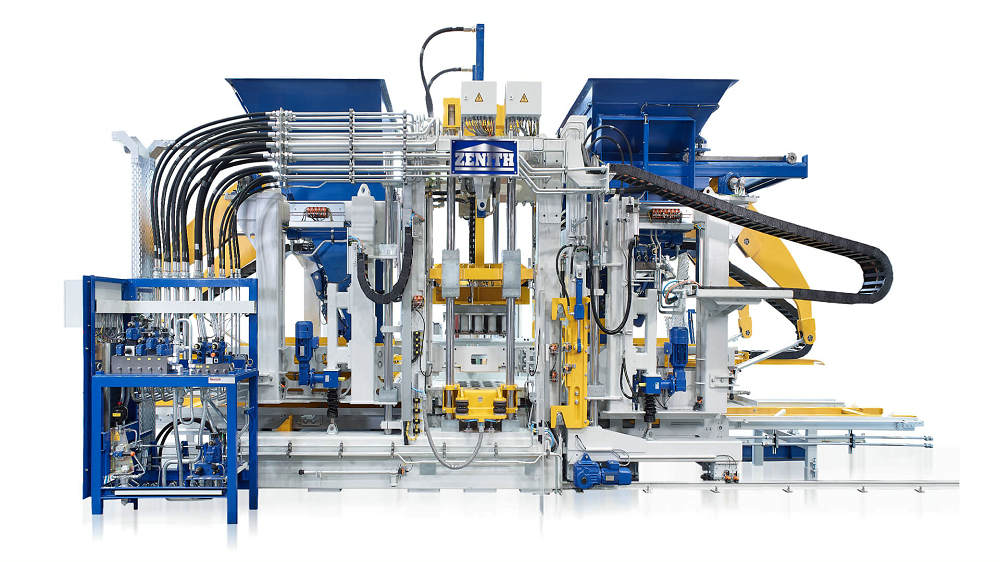
For example, the Germany Zenith Block Machine integrates perfectly with servo technology to produce blocks with exceptional compressive strength. Many plant owners we work with now request retrofits or new lines exclusively featuring servo vibration. The reason is simple: faster cycle times (around 12 to 15 seconds per cycle for standard hollow blocks) and less waste. Our factory data indicates that a servo driven machine can increase daily output by up to 25 percent while using the same floor space. The precise synchronization also prevents concrete segregation, giving every block identical dimensions. This is exactly why our clients from Europe, North America and Australia choose Quangong Machinery Co., Ltd. when upgrading their block plants.
How Do Servo Vibration Block Machines Reduce Energy and Maintenance Costs?
Let us talk about the numbers. For a medium-scale brick plant, electricity can account for nearly 40 percent of operational costs. Traditional eccentric weight vibrators run at fixed speeds, wasting power during idle strokes. Servo motors, however, draw current only when vibration is needed. Our factory tested a side-by-side comparison: a standard 60 tons hydraulic machine consumed 55 kWh per shift, while a servo vibration block machine consumed just 37 kWh for the same output. Over a full year, that translates to thousands of dollars saved. Moreover, hydraulic oil replacement and filter changes are eliminated. The Germany Zenith Block Machine equipped with servo drives typically runs 9,000 hours without major service. Another hidden advantage is noise reduction. Our customers report noise levels dropping from 98 dB to 82 dB, creating a safer work environment. Quangong Machinery Co., Ltd. has engineered its QT series with forced lubrication for servo motors, ensuring thermal stability even in high-temperature regions. The bottom line: less downtime, fewer spare parts, and a rapid return on investment. One plant manager told our team that their servo machine paid for itself in 14 months purely from energy savings and reduced maintenance.
Which Technical Parameters Define a High-Performance Servo Vibration Block Machine?
To help you evaluate modern equipment, we have compiled two detailed tables based on our factory’s best-selling models. The following parameters represent industry benchmarks for machines producing solid blocks, hollow blocks, and paving stones. Note that the Germany Zenith Block Machine often sets the standard for these specifications, and our own designs align with top-tier performance requirements.
| Parameter | Standard Hydraulic Machine | Servo Vibration Block Machine (Quangong Model QT-12) |
| Vibration Frequency Range | 2800–3800 rpm | 2500–5500 rpm (variable via servo) |
| Max Compaction Force | 25 kN | 48 kN |
| Cycle Time (400x200x200mm hollow block) | 18 seconds | 12 seconds |
| Energy per 1000 blocks | 95 kWh | 62 kWh |
| Oil Consumption | 120 liters every 1500h | Zero hydraulic oil |
Beyond the basic comparisons, consider the control precision. Servo vibration block machines feature an integrated HMI with recipe storage for up to 200 different product types. Our factory uses a multi-layer vibration algorithm that automatically adjusts during the filling and pressing stages. The table below focuses on dimensional accuracy and mold compatibility.
| Feature | Servo Vibration Advantage |
| Height tolerance | ±0.5 mm (consistent for all layers) |
| Mold interchangeability | Works with Germany Zenith Block Machine molds directly |
| Vibration acceleration | Up to 8 G peak, dynamically controlled |
| Noise level at operator station | 82 dBA |
| Mean time between failures (MTBF) | 4200 hours |
As you can see, the servo platform allows brick factories to produce higher strength blocks (often exceeding 20 MPa after 7 days) while using leaner concrete mixtures. Our customers often combine this with a Germany Zenith Block Machine to maximize automation. QGM provides full technical training for these parameters, ensuring that your team uses every feature effectively.
Why Do Modern Brick Factories Prefer Servo Vibration Block Machines? – Three Critical FAQs
How Can Long-Term ROI Guide Your Decision Between Hydraulic and Servo Systems?
When our factory evaluates total cost of ownership, the numbers speak for themselves. A modern servo vibration block machine costs roughly 15 to 20 percent more upfront than a comparable hydraulic unit. But with energy savings averaging 15,000 USD per year (based on two shift operation), lower spare parts consumption, and reduced downtime, the payback period is typically under 18 months. Additionally, the Germany Zenith Block Machine platform retains higher resale value because of its reputation for precision. We have calculated that after five years, a servo machine yields nearly 85,000 USD more net profit than a hydraulic counterpart. Another factor is product quality: servo produced blocks achieve smoother surfaces and tighter tolerances, allowing you to charge premium prices for architectural blocks or pavers. Quangong Machinery Co., Ltd. has documented case studies where a customer increased their block selling price by 12 percent after switching to servo vibration, simply because contractors recognized the consistent dimensions. Considering rising energy costs and stricter environmental regulations, the future clearly favors servo driven systems. Our factory recommends that if you plan to operate for more than three years, servo is the only logical choice.