
Why Do The Right Milling Tools Make Such A Big Difference In CNC Machining?
2026-03-30
When I look at modern machining projects, I often find that the real difference between stable output and repeated production trouble is not only the machine itself, but the quality and suitability of the cutting solution behind it. That is where Ningbo Wangdefu Precision Machinery Co.Ltd. enters the conversation naturally. In practical production, I see how the right Milling Tools can help reduce vibration, improve surface finish, support tighter tolerances, and keep machining efficiency under control when working with aluminum, steel, stainless steel, composites, and other demanding materials.
I also know that buyers rarely struggle with theory alone. More often, they are dealing with short tool life, unstable consistency, poor surface quality, slow cycle times, or uncertainty about which cutter geometry is actually suitable for the task. That is why I prefer to discuss Milling Tools from the perspective of real production pressure rather than generic product promotion. If a tool cannot solve a shop-floor problem, it does not create real value.
What Problems Do Buyers Usually Face When Choosing Milling Tools?
In my experience, the most common problem is not the lack of options. It is the lack of fit between the tool and the real machining condition. A cutter may look right on paper and still perform poorly once it enters actual production.
- I often see premature wear caused by tool material that does not match the workpiece.
- I often see poor edge quality because the cutter geometry is too general for the part design.
- I often see inconsistent batch results when the tool cannot maintain stability during long production runs.
- I often see wasted machine time when feed rate and cutting efficiency are limited by weak tool performance.
- I often see buyers struggle when standard catalogue tools do not fit special grooves, shoulders, profiles, or complex part structures.
These issues are exactly why choosing Milling Tools should never be reduced to a simple price comparison. What matters more is whether the tool can support real machining goals such as precision, repeatability, cleaner surfaces, and production reliability.
How Can Better Milling Tools Improve Machining Results In Daily Production?
When I evaluate a milling cutter, I focus on what it changes in production, not just how it is described. A stronger milling solution should help a factory cut more predictably, reduce adjustment time, and keep part quality more stable across multiple batches.
| Production Concern | What I Usually Want To Improve | How Better Tools Help |
| Surface finish | Reduce roughness and rework | Sharper cutting action and more stable machining paths support smoother part surfaces |
| Dimensional accuracy | Keep tight tolerances in batch production | Better rigidity and controlled wear help maintain more consistent results |
| Tool life | Avoid frequent tool changes | Wear-resistant cutter materials support longer service intervals |
| Machining efficiency | Increase output without sacrificing quality | Optimized geometry can support faster and more stable cutting conditions |
| Complex part compatibility | Handle special contours, grooves, and profiles | Custom or application-focused tool designs improve practical fit |
For me, this is where a strong supplier becomes more valuable than a simple catalogue seller. A capable manufacturer does not just provide a cutter. It helps match the tool to the workpiece, the machine, the cutting method, and the production target.
Which Types Of Milling Tools Are More Suitable For Different Machining Tasks?
I never assume one cutter can do everything well. Different machining tasks demand different tool structures, and the smartest choice depends on what the buyer is actually producing.
- Flat end mills are useful when I need clean slotting, shoulder work, and general-purpose precision milling.
- Carbide end mills are often preferred when I need stronger wear resistance, higher stability, and dependable cutting performance across demanding materials.
- Square shoulder end mills are practical when precise edges and accurate shoulder geometry matter.
- Right-angle plane milling cutters are valuable when large flat surfaces and stable planar machining are priorities.
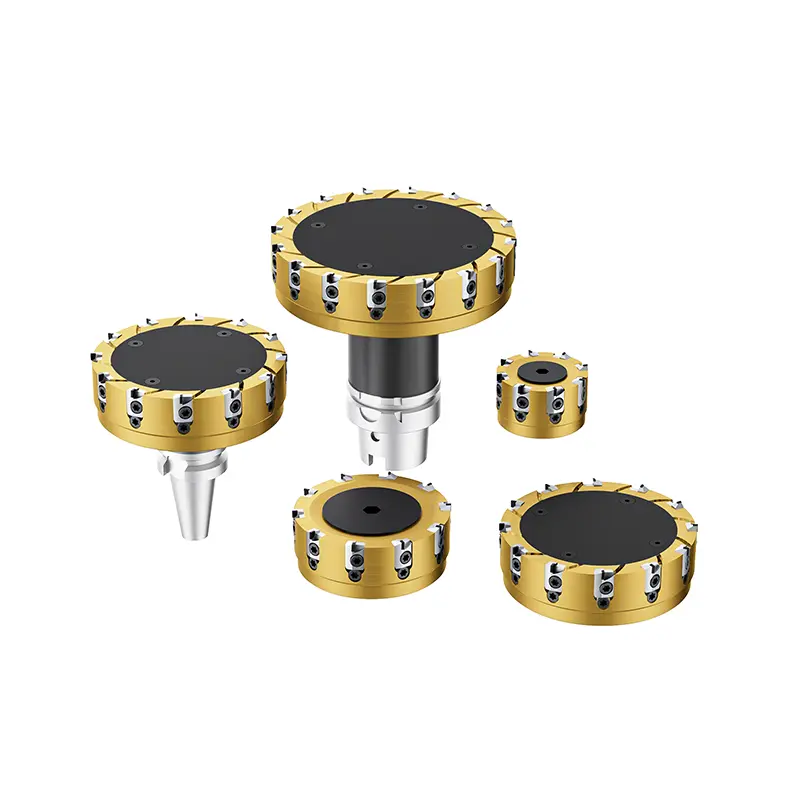
- Non-standard cutter heads make sense when standard tools cannot match special part geometry or unique process demands.
In many production environments, the right answer is not to choose the most complicated design. It is to choose the design that matches the application most honestly. That approach usually saves more time, reduces more waste, and creates more predictable results.
Why Does Customization Matter So Much In Precision Machining?
I have seen many buyers lose time because a standard tool gets them close, but not close enough. That gap matters. When part geometry becomes more specialized, standard cutters may create unnecessary compromise in speed, finish, or tool life. This is why custom tool support can become a serious advantage rather than an optional extra.
If a supplier can provide non-standard solutions for special profiles, complex shoulder structures, unusual groove requirements, or specific production materials, I can often reduce multiple process problems at once. I may improve consistency. I may shorten the cycle. I may reduce secondary finishing. I may even make the full production route simpler.
That is one reason why I pay attention to suppliers that do more than list standard products. A manufacturer with experience in customized cutter heads and application-oriented support is often easier to work with when projects move from simple jobs to demanding, high-value parts.
What Should I Look For When I Compare Milling Tool Suppliers?
When I compare suppliers, I do not stop at product names. I look deeper at whether they can support the practical needs of machining teams under real production pressure.
| What I Check | Why It Matters To Me |
| Tool manufacturing consistency | I want reliable batch quality, not random performance differences |
| Experience with multiple materials | I need solutions that can handle aluminum, steel, stainless steel, composites, and related applications |
| Ability to offer customized designs | I may need support for non-standard parts and special machining structures |
| Technical guidance | I value help with selection, process matching, and application support |
| Long-term service mindset | I prefer suppliers that focus on repeat cooperation instead of one-time selling |
In other words, I want a supplier that understands production goals, not just tool categories. That usually leads to fewer misunderstandings, faster decision-making, and more practical recommendations.
How Do Better Milling Tools Support Industries That Need Precision And Repeatability?
Precision machining is rarely isolated to one field. I regularly see demand coming from industries that expect reliable dimensional control, dependable surface quality, and stable batch output. In those environments, tool performance directly affects delivery confidence.
- In automotive parts production, stable cutting helps maintain repeatability in volume manufacturing.
- In aerospace-related machining, precision and surface quality often matter as much as efficiency.
- In mold and tooling work, profile accuracy and finish quality are critical to downstream results.
- In robotics and advanced equipment manufacturing, complex structures often require flexible and specialized cutter solutions.
- In general engineering, balanced performance matters because productivity and cost control must move together.
This is why I see Milling Tools as a strategic production component rather than a simple accessory. A better cutter choice supports more than one machining step. It can influence the full manufacturing rhythm.
Why Is It Smarter To Think About Total Value Instead Of Only Unit Price?
I understand why buyers compare prices first. It is the easiest number to see. But in machining, the cheapest tool is not always the most economical option. If a lower-priced cutter wears quickly, causes rework, lowers cutting stability, or increases downtime, the real production cost becomes much higher than expected.
When I think about total value, I usually compare these factors together:
- How long the tool lasts in real cutting conditions
- How stable the finished surface remains across batches
- How often operators need to stop and adjust the process
- How much scrap or rework comes from poor cutter performance
- How well the supplier can support future projects and tool optimization
That broader view leads to stronger purchasing decisions. It also helps me choose solutions that support production growth rather than create hidden operating costs.
What Makes A Long-Term Milling Partner More Useful Than A One-Time Vendor?
I usually prefer working with a supplier that can grow with the project. A one-time vendor may provide a tool, but a long-term machining partner can provide continuity, technical understanding, and faster response when new part requirements appear.
For me, that means the relationship becomes more practical over time. Once the supplier understands the materials, machine setup, part geometry, and quality expectations, tool recommendations become more accurate. Communication gets easier. Testing becomes more focused. Risk goes down.
That kind of support is especially valuable when I deal with demanding components, customized cutter needs, or projects that move from sampling into repeat production. In those situations, consistency matters just as much as the initial quotation.
Why Should I Take The Next Step If I Am Still Comparing Options?
If I am serious about improving machining stability, surface quality, and process efficiency, it makes sense to discuss the application in detail instead of guessing with a generic tool selection. A more suitable cutter can reduce waste, improve consistency, and make production planning easier. If you are reviewing suppliers for your next machining project, now is a good time to connect with Ningbo Wangdefu Precision Machinery Co.Ltd. and explore a solution built around your actual processing needs. Contact us today to discuss your drawings, materials, production goals, or custom requirements, and send your inquiry for a more practical recommendation on the right Milling Tools for your business.