

Why Does Surface Treatment Quality Affect the Lifetime of Universal Couplings?
2026-05-25
Industrial transmission systems operate under constant mechanical stress, vibration, rotational torque, humidity exposure, and fluctuating temperatures. In steel mills, mining conveyors, rolling equipment, marine machinery, and heavy manufacturing lines, even a minor surface defect can gradually develop into corrosion, fatigue cracking, or premature wear. This is why the surface treatment process directly affects the operating life of a Universal Coupling.
In our manufacturing experience, untreated metal surfaces are far more vulnerable to oxidation, abrasive particles, and lubricant contamination. Once corrosion begins around key rotating components, balance accuracy and torque transmission efficiency may decline quickly. Our factory pays close attention to coating adhesion, shot blasting consistency, and anti-rust protection before assembly inspection.
Raydafon Technology Group Co.,Limited focuses on industrial transmission components engineered for demanding operating conditions. Our engineering team continuously evaluates plating stability, surface hardness, and wear resistance to improve long-term operational reliability across different industries.
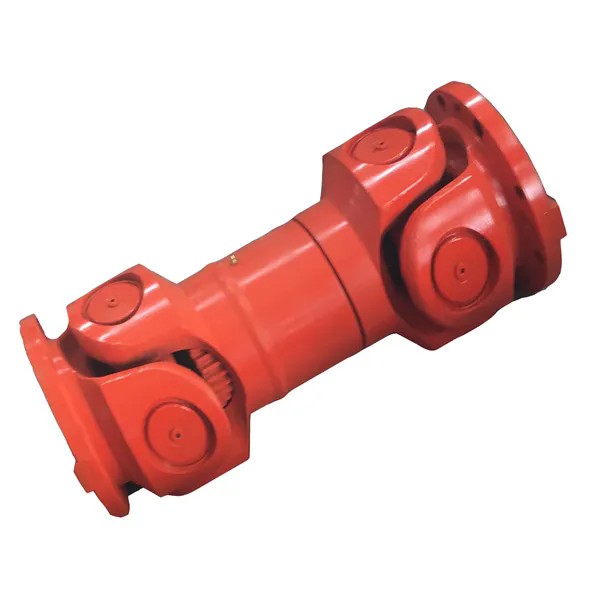
How Do Different Surface Treatments Influence Mechanical Performance?
Several treatment methods are commonly used in modern transmission manufacturing, including black oxide coating, zinc plating, phosphate treatment, electrophoretic coating, chrome plating, and thermal spraying. Each process provides different levels of corrosion resistance, hardness improvement, and environmental adaptability.
For a high-load Universal Coupling, surface consistency is not only about appearance. Proper treatment helps reduce friction wear around moving joints and prevents pitting caused by moisture or chemical exposure. In industrial plants where coolant vapor, lubricants, and metal dust are present, coated surfaces often outperform untreated parts by a significant margin.
Our production department selects coating processes according to customer application requirements, rotational speed, shaft size, and environmental exposure levels. In coastal installations or high-humidity workshops, enhanced anti-corrosion treatment becomes especially important for maintaining stable operation.
| Surface Treatment Type | Main Advantage | Typical Application |
| Black Oxide | Basic corrosion protection | Indoor machinery systems |
| Zinc Plating | Improved rust resistance | General industrial equipment |
| Phosphate Coating | Better lubricant retention | Heavy-duty transmission parts |
| Electrophoretic Coating | Uniform surface coverage | Outdoor mechanical systems |
| Chrome Plating | High wear resistance | Precision rotating assemblies |
What Technical Parameters Should Buyers Evaluate Before Selecting a Coupling?
Many purchasing teams focus mainly on dimensions and torque ratings, but experienced engineers also review surface hardness, coating thickness, salt spray resistance, and material compatibility. These factors directly influence maintenance cycles and downtime costs.
A properly engineered Universal Coupling should maintain alignment stability under repeated rotational stress. Surface treatment plays a major role in preventing micro-cracks that often develop under cyclic loading conditions. In continuous production environments, poor coating quality may shorten service intervals and increase replacement frequency.
Our factory performs inspection procedures that include dimensional verification, surface adhesion checks, hardness testing, and dynamic balancing analysis before shipment. These quality control steps help ensure stable operation in demanding industrial applications.
| Technical Item | Typical Range |
| Torque Capacity | 200 Nm to 95000 Nm |
| Material | Carbon steel or alloy steel |
| Surface Hardness | HRC 35 to HRC 55 |
| Operating Speed | Up to 4000 RPM depending on model |
| Coating Thickness | 15 μm to 40 μm |
| Corrosion Resistance | 48 to 500 hours salt spray testing |
Why Do Harsh Working Conditions Accelerate Surface Failure?
Heavy-duty industrial systems rarely operate in ideal environments. Dust contamination, coolant splashing, high ambient heat, and sudden load variation place continuous pressure on rotating transmission components. A poorly protected Universal Coupling may gradually lose surface integrity, especially around welded sections and bearing interfaces.
In mining operations and steel processing plants, abrasive particles can damage exposed metal areas quickly. Once coating layers become compromised, oxidation may spread beneath the surface and weaken structural reliability. Our engineering team recommends selecting surface treatments according to actual field conditions rather than relying only on standard specifications.
Raydafon has worked with customers requiring custom corrosion protection solutions for offshore platforms, heavy conveyors, automated production systems, and metallurgical equipment. Our experience shows that optimized surface processing can significantly reduce maintenance frequency and unexpected shutdown risks.
How Can Buyers Identify High-Quality Surface Processing Standards?
Reliable suppliers usually provide detailed inspection records, coating specifications, hardness data, and corrosion testing results. Buyers should evaluate whether the coating thickness is uniform, whether edges are properly covered, and whether adhesion remains stable after mechanical stress testing.
A high-quality Universal Coupling often shows smooth coating consistency without blistering, peeling, or uneven coloration. Surface preparation before coating is equally important because contaminants or improper blasting may weaken long-term adhesion.
Our quality control workflow includes raw material inspection, machining verification, pre-treatment cleaning, coating evaluation, and final assembly testing. Our factory also supports customized packaging and export protection to reduce transportation-related corrosion risks.
Raydafon Technology Group Co.,Limited continues improving manufacturing processes to meet the growing demand for durable industrial transmission solutions across global markets.
What Questions Are Commonly Asked About Surface Treatment and Coupling Lifetime?
Q1: Does coating thickness affect the service life of industrial couplings?
A1: Yes. Proper coating thickness improves corrosion resistance and reduces direct exposure to moisture, chemicals, and abrasive particles. However, excessive thickness may influence dimensional accuracy, so balanced process control is important.
Q2: Which surface treatment is most suitable for outdoor industrial applications?
A2: Electrophoretic coating and advanced zinc-based treatments are commonly selected for outdoor systems because they provide strong resistance against humidity, rain exposure, and oxidation under changing environmental conditions.
Q3: How can operators extend the operating life of a Universal Coupling?
A3: Regular lubrication, alignment inspection, cleaning of debris accumulation, and timely replacement of damaged protective coatings are essential maintenance practices for extending coupling service life in industrial environments.
Why Should Long-Term Reliability Matter More Than Initial Purchase Cost?
In modern manufacturing facilities, downtime can create production delays, maintenance expenses, and reduced operational efficiency. Choosing transmission components with reliable surface protection often lowers total ownership cost over time. A durable Universal Coupling with stable corrosion resistance can help maintain consistent power transmission and reduce unplanned replacement cycles.
Our technical team understands the operational challenges faced by heavy industry customers worldwide. From machining precision to coating durability, every production stage is carefully monitored to support dependable field performance. If you are searching for industrial transmission components designed for demanding operating conditions, contact us today for technical consultation and product support.