

Why Helical Gears Are Essential Components in Industrial Automation Systems?
2026-02-09
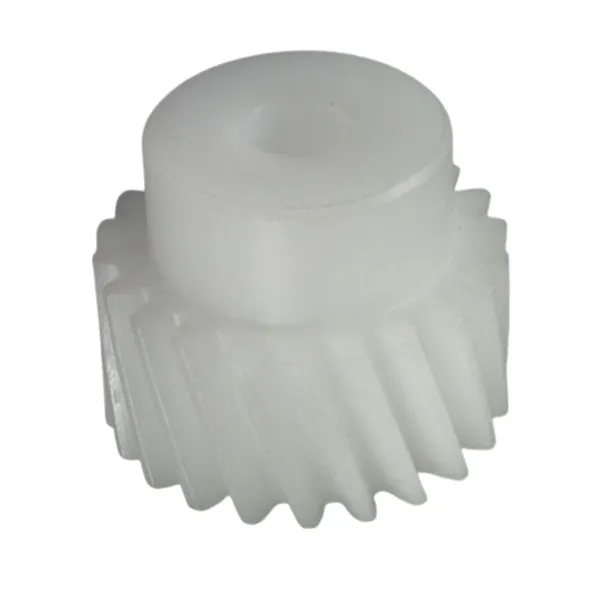
In industrial automation systems across North America and Europe, smooth power transmission is not a preference but a requirement. Helical gears are widely adopted because their angled tooth profile allows gradual engagement, reducing shock loads and vibration. This characteristic directly supports stable torque transfer in conveyor systems, robotic arms, and CNC-driven assemblies used in smart factories.
Compared with spur gears, helical gears generate less noise at high rotational speeds, a factor often referenced by plant engineers working under OSHA noise exposure guidelines. In automated lines where uptime and operator comfort matter, our design approach focuses on optimized helix angles and tooth contact ratios to ensure consistent performance. This is especially critical when Precision Gear solutions are used in servo-driven automation where accuracy and repeatability define output quality.
How Do Load Capacity and Torque Ratings Affect Industrial Automation Reliability?
Automation systems typically operate under continuous load cycles, making load capacity a decisive selection factor. Helical gears distribute forces across multiple teeth, allowing higher torque transmission within compact gearboxes. This structural advantage supports automated palletizers, packaging equipment, and material handling systems operating around the clock.
From a manufacturing standpoint, our factory applies controlled heat treatment and surface finishing to enhance fatigue resistance. In applications such as automated welding cells or assembly robots, Precision Gear components must maintain dimensional stability under fluctuating loads. Our experience supplying global OEMs enables our engineering team to align gear specifications with real-world duty cycles.
| Parameter | Standard Range | Industrial Application Relevance |
| Module | 1.0 to 16 | Supports light to heavy automation systems |
| Helix Angle | 8 to 30 degrees | Balances axial load and smooth transmission |
| Torque Capacity | Up to 120000 Nm | Meets high-load automation requirements |
| Accuracy Grade | DIN 6 to DIN 8 | Ensures precision motion control |
What Role Do Material Selection and Manufacturing Standards Play?
Material selection defines the service life of gears used in industrial automation. Alloy steels such as 20CrMnTi and 42CrMo are commonly specified due to their strength and wear resistance. These materials are widely recognized by local engineering standards in the US and EU markets.
At Raydafon Technology Group Co.,Limited, manufacturing processes align with ISO and DIN standards to meet the expectations of system integrators. Our production flow emphasizes gear hobbing accuracy, controlled carburizing depth, and precision grinding. When Precision Gear units are installed in automated transfer systems or pick-and-place equipment, material integrity ensures predictable performance and long maintenance intervals.
| Material | Heat Treatment | Typical Automation Use |
| 20CrMnTi | Carburized and quenched | High-speed gear reducers |
| 42CrMo | Quenched and tempered | Heavy-duty automation drives |
| Alloy Steel Custom Grades | Induction hardened | Specialized robotic systems |
Why Is Precision Critical in Automated Motion Control Systems?
Modern automation relies on precise synchronization between motors, sensors, and mechanical components. Even minimal backlash or misalignment can compromise system accuracy. Helical gears are engineered to minimize transmission errors, supporting closed-loop control systems commonly used in smart manufacturing.
Our engineering philosophy emphasizes tight tolerances and consistent tooth geometry. Precision Gear solutions designed for automation applications help maintain positional accuracy in indexing tables and automated inspection equipment. Raydafon integrates quality control at every stage to ensure compliance with local industrial requirements and customer specifications.
How Do Custom Gear Solutions Support Diverse Automation Scenarios?
No two automation systems are identical. Customization allows gear components to adapt to space constraints, load variations, and environmental factors. Our team works closely with system designers to deliver tailored solutions for logistics automation, food processing lines, and automated warehouses.
By leveraging application data, our factory produces gear sets optimized for efficiency and durability. Precision Gear configurations can be adapted for low-speed high-torque drives or high-speed positioning systems. This flexibility helps automation integrators reduce system complexity while improving overall performance.
FAQ: Why Helical Gears Are Essential Components in Industrial Automation Systems?
Q1: Why Helical Gears Are Essential Components in Industrial Automation Systems?
Helical gears provide smooth, quiet, and efficient power transmission, which is critical for automated systems requiring continuous operation and precise motion control.
Q2: Why Helical Gears Are Essential Components in Industrial Automation Systems when noise reduction is required?
Their gradual tooth engagement significantly lowers operational noise, making them suitable for factories that follow strict workplace safety and noise regulations.
Q3: Why Helical Gears Are Essential Components in Industrial Automation Systems for long-term reliability?
The load-sharing tooth design reduces wear and extends service life, ensuring stable performance in automation environments with high duty cycles.
How Can the Right Gear Partner Improve Automation Performance?
Choosing a reliable manufacturing partner is as important as selecting the right gear design. Raydafon Technology Group Co.,Limited combines engineering expertise with scalable production capabilities to support automation projects worldwide. Our commitment to quality, customization, and technical support helps system builders achieve consistent results.
In summary, helical gears remain a cornerstone of industrial automation due to their efficiency, durability, and adaptability. Precision Gear solutions designed with application-specific requirements can significantly enhance system reliability and productivity. Contact our team today to discuss your automation project and request a tailored quotation that meets your operational goals.