

Why Is HDPE Pipe Widely Used in Gas Distribution Networks?
2026-01-27
In modern gas distribution networks, reliability, safety, and long-term performance are crucial. Our HDPE Pipe offers excellent chemical resistance, high impact strength, and flexibility, making it an ideal solution for various pipeline systems. At Ningbo Sunplast Pipe Co., Ltd., our factory specializes in producing HDPE Pipe that meets or exceeds ISO and ASTM standards. We ensure that every pipe maintains uniform wall thickness, consistent diameter, and precise tolerances, which reduces the risk of leakage and extends service life.
Our HDPE Pipe is widely adopted in urban, suburban, and rural gas networks due to its ability to withstand shifting soil, heavy traffic loads, and fluctuating temperatures. Unlike traditional steel or iron pipes, our HDPE Pipe is corrosion-resistant, which eliminates the need for protective coatings or cathodic protection. This reduces long-term maintenance costs and ensures uninterrupted gas flow for decades. Additionally, our HDPE Pipe can be produced in continuous lengths up to 100 meters, minimizing the number of joints and further improving pipeline integrity.
How Do HDPE Pipe Material Properties Enhance Network Longevity?
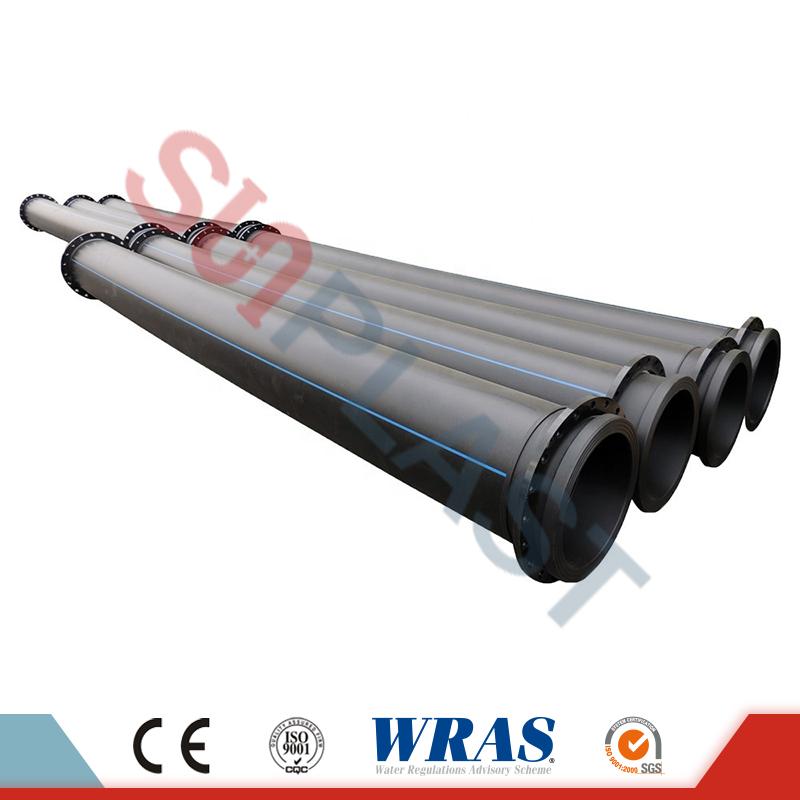
The performance of HDPE Pipe is highly dependent on its material properties. Our HDPE Pipe is manufactured from high-density polyethylene with a minimum density of 0.955 g/cm³, and it complies with PE100 grade specifications. This material offers superior tensile strength, flexibility, and resistance to slow crack growth, making it highly suitable for gas distribution pipelines. Our factory employs precise extrusion technology and rigorous quality control procedures to ensure every HDPE Pipe meets these requirements.
Our HDPE Pipe’s resistance to chemical corrosion is particularly important for underground installations. Soils may contain acidic or alkaline components, fertilizers, or other chemical residues that can damage conventional metal pipes. Our HDPE Pipe resists such chemical interactions, preventing degradation and pipeline failures over time. The flexibility of our pipes also allows them to absorb minor ground movements and vibrations caused by traffic, reducing stress on joints and connections. Our factory regularly tests each batch for hydrostatic pressure, tensile strength, and impact resistance to guarantee long-term performance under operational pressures.
| Specification | Value |
| Standard | ISO 4437, ASTM F714 |
| Diameter Range | 20mm–630mm |
| Pressure Rating | PN6–PN16 |
| Operating Temperature | -20°C to 60°C |
| Material | HDPE PE100 |
| Color | Black with yellow stripe |
| Density | ≥0.955 g/cm³ |
| Tensile Strength | 26 MPa minimum |
Why Is Installation of HDPE Pipe More Efficient Than Traditional Alternatives?
Our HDPE Pipe is lightweight, easy to handle, and flexible, which significantly reduces installation time and labor costs. At Ningbo Sunplast Pipe Co., Ltd., our factory provides detailed guidance for fusion welding methods, including butt fusion, socket fusion, and electrofusion. These methods ensure strong, leak-proof connections that outperform traditional mechanical couplings. Our HDPE Pipe can be installed in long continuous lengths, reducing the number of joints and weak points in the network.
Flexibility is another key advantage during installation. Our HDPE Pipe can follow natural terrain contours without the need for complex fittings or additional excavation. This feature is particularly valuable in areas with uneven soil, slopes, or high traffic. Contractors have noted that using our HDPE Pipe allows for faster project completion while maintaining a high level of safety. Additionally, our HDPE Pipe can be coiled for easy transportation to remote or urban locations, further reducing logistical challenges.
What Performance Advantages Does HDPE Pipe Offer in Extreme Environments?
HDPE Pipe from our company maintains its structural integrity under extreme conditions, including high internal pressures, sub-zero temperatures, and aggressive soil environments. Our HDPE Pipe is resistant to UV radiation, chemical attack, abrasion, and slow crack growth. Our factory conducts extensive testing, including hydrostatic pressure testing, impact resistance, and flexibility trials, to ensure that the pipe performs reliably throughout its service life.
In coastal areas, industrial zones, and agricultural sites, our HDPE Pipe demonstrates outstanding performance due to its chemical resistance. Unlike metal pipes that may corrode due to soil salinity or chemical exposure, our HDPE Pipe remains intact. Additionally, its high impact strength ensures that it can withstand accidental mechanical shocks during construction or from natural events. Our HDPE Pipe also maintains flexibility at low temperatures, reducing the risk of brittleness and fracture.
| Test Type | Result |
| Hydrostatic Pressure Test | Pass at 20°C for 50 years equivalent |
| Tensile Strength | 26 MPa minimum |
| Impact Resistance | High, no cracking at -20°C |
| Flexibility | Radius up to 25D without damage |
| Chemical Resistance | Excellent against acids, alkalis, and solvents |
| UV Resistance | Stable under prolonged sunlight exposure |
How Can HDPE Pipe Ensure Safety in Gas Distribution Networks?
Safety is the top priority in gas distribution systems. Our HDPE Pipe reduces the risk of leaks due to its seamless construction and strong fusion welding capabilities. At Sunplast, our factory implements stringent quality assurance to identify and eliminate material defects. Our HDPE Pipe resists crack propagation and mechanical damage, ensuring that the network remains secure under varying operational conditions.
In addition, our HDPE Pipe is non-toxic and safe for both urban and rural communities. Its lightweight nature reduces the risk of injuries during handling and installation. By minimizing the number of joints required and using proven welding techniques, our HDPE Pipe ensures that gas distribution networks are both safe and reliable. Our customers have reported decades-long service life with minimal maintenance, highlighting the dependability of our products in real-world applications.
FAQ: Why Is HDPE Pipe Widely Used in Gas Distribution Networks?
Q1: How does HDPE Pipe prevent leakage compared to traditional metal pipes?
A1: Our HDPE Pipe is made from high-density polyethylene and joined using fusion welding techniques, creating a seamless pipeline. Unlike steel or iron pipes, it is corrosion-resistant and does not require coatings or cathodic protection. This reduces the risk of gas leaks and ensures long-term operational safety.
Q2: What maintenance advantages does HDPE Pipe offer?
A2: HDPE Pipe requires minimal maintenance because it resists corrosion, cracking, and chemical damage. Our pipes maintain flexibility and tensile strength over decades, significantly reducing inspection and repair costs compared to metal or PVC pipes.
Q3: Can HDPE Pipe handle extreme environmental conditions?
A3: Yes, our HDPE Pipe performs reliably in a wide temperature range, withstands high pressures, and resists UV exposure. Its durability makes it suitable for both urban infrastructure and remote installations, ensuring safety and long-term performance.
Conclusion
Our HDPE Pipe provides a reliable, safe, and efficient solution for modern gas distribution networks. With superior material properties, ease of installation, and excellent resistance to corrosion and mechanical stress, our products are ideal for urban, suburban, and rural applications. Choosing our HDPE Pipe ensures minimal maintenance, lower operational costs, and extended service life. For customized solutions, technical support, and high-quality pipelines, contact our team at Ningbo Sunplast Pipe Co., Ltd. today to secure your gas distribution projects with confidence.