

Why Is Multilayer Pipe Technology Widely Used in Residential and Commercial Projects?
2026-07-07
1. How Does the Aluminum Barrier in Multilayer Pipe Prevent Oxygen Ingress and Corrosion?
In our factory, we have manufactured composite pipe systems for over 15 years. One of the primary reasons Multilayer Pipe is chosen for both homes and office buildings is the integrated aluminum layer. This aluminium sheet acts as an absolute oxygen barrier, reducing dissolved oxygen to below 0.1 mg per liter. In traditional metal pipe systems, oxygen causes pitting and sludge build up in radiators and boilers. With our Multilayer Pipe, the aluminium layer stops oxygen from diffusing through the wall, which significantly extends the life of pumps and valves. Many local HVAC contractors in Germany and the UK now specify this material because it eliminates the need for costly corrosion inhibitors. Our Ningbo Sunplast Pipe Co., Ltd. uses a laser welded aluminum strip that overlaps by 1.5 mm, ensuring a continuous barrier. This design also reduces linear expansion by up to 75 percent compared to pure PEX, making the pipe stable in concrete screed. For residential underfloor heating and commercial chilled water systems, the oxygen barrier is a non negotiable feature that drives widespread adoption.
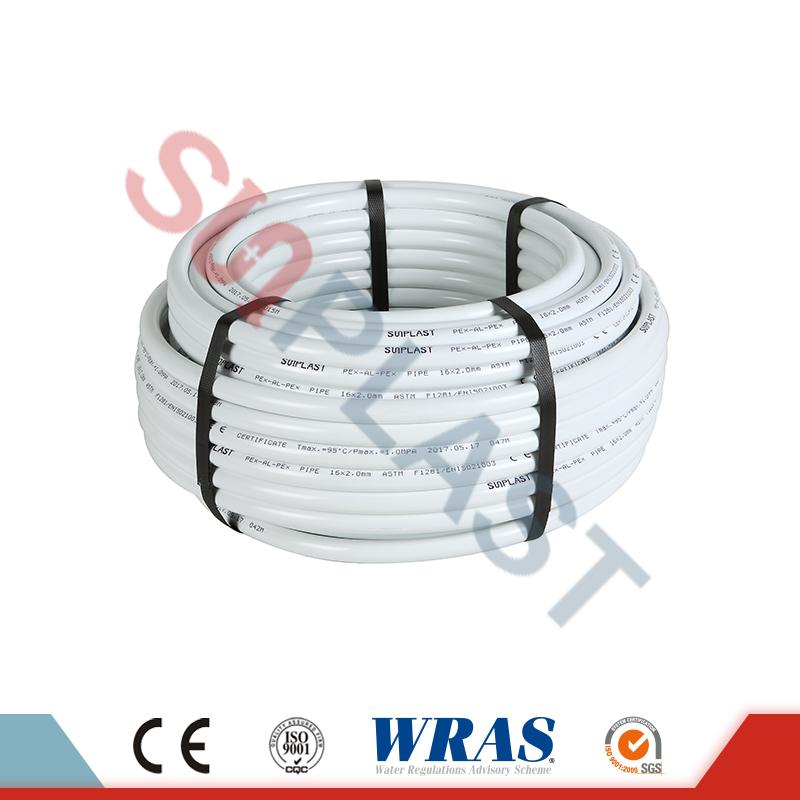
2. Why Does the Thermal Memory of Multilayer Pipe Simplify Installation in Tight Spaces?
Installation speed is critical for both residential and commercial projects. A Multilayer Pipe is flexible enough to bend around obstacles yet retains shape after bending. Our factory produces pipes with a bending radius as tight as 5 times the outer diameter. This allows plumbers to install long continuous runs without fittings, reducing potential leak points. For example, a 20 meter run for a radiator can be bent by hand without special tools. In contrast, copper requires multiple solder joints. Our Sunplast also offers a crimping system that is compatible with standard press tools. Many local crews in Australia and North America report saving 30 percent of installation time when switching from rigid materials to our Multilayer Pipe. The pipe also has a low thermal expansion coefficient of 0.025 mm/m°C, which means fewer expansion loops compared to PEX. This is a huge advantage in commercial ceilings where space is limited. The ability to uncoil the pipe from a box and route it directly with minimal connectors explains why this technology is becoming the first choice for contractors.
3. What Technical Specifications Make Multilayer Pipe Suitable for Potable Water and Heating?
Versatility is a major selling point. A single Multilayer Pipe product can handle hot and cold water, underfloor heating, and radiator connections. The table below lists the standard parameters we test in our factory lab.
| Specification – Pipe size | Multilayer Pipe 16x2 mm | Multilayer Pipe 26x3 mm | Typical application |
| Maximum working pressure (at 20°C) | 10 bar | 10 bar | Domestic hot water |
| Maximum working temperature | 95°C (short term 110°C) | 95°C (short term 110°C) | Heating systems |
| Oxygen diffusion rate | < 0.1 mg/(m²·day) | < 0.1 mg/(m²·day) | Corrosion protection |
| Aluminum thickness | 0.2 mm | 0.3 mm | Mechanical strength |
| Linear expansion coefficient | 0.025 mm/m°C | 0.025 mm/m°C | Stable in screed |
| Property – Application | Multilayer Pipe (our standard) | Copper pipe (traditional) | PEX pipe (non barrier) |
| Thermal conductivity (W/mK) | 0.45 | 400 | 0.38 |
| Bending radius (for 16mm pipe) | 80 mm (hand bend) | N/A (requires elbow fittings) | 64 mm (spring assisted) |
| Internal surface roughness | 0.005 mm | 0.0015 mm | 0.002 mm |
| Estimated service life (50 years) | Yes (tested at 10 bar / 70°C) | Yes (with proper water chemistry) | Yes (oxygen barrier required) |
Our factory conducts a 5000 hour hydrostatic pressure test at 95°C to verify long term performance. The Multilayer Pipe also passes the 5000 hour chlorine resistance test per ASTM F2263, making it safe for municipal water. These numbers give engineers and building owners confidence that the product will last for decades without issues.
4. How Does the Lightweight Nature of Multilayer Pipe Reduce Logistics and Handling Costs?
For large commercial projects, weight and transport are significant cost factors. A 100 meter coil of our Multilayer Pipe 20x2 mm weighs approximately 18 kg, while the same length of copper weighs over 40 kg. This means our factory can ship more footage per container, lowering freight costs. On site, workers can carry multiple coils with one hand, reducing fatigue and injury. Many local plumbing companies tell us that they can complete a 50 apartment building using only one delivery truck, whereas copper would need two. The flexibility also allows the Multilayer Pipe to be shipped in compact coils, saving warehouse space. Additionally, the pipe has a smooth inner surface that reduces pumping energy. For a large commercial HVAC system, this can save 4 to 6 percent of electrical costs over the life of the building. Our Ningbo Sunplast Pipe Co., Ltd. has designed the coil packaging with ergonomic handles for easy handling. This logistical advantage is a key reason why both residential builders and commercial developers are adopting the technology at an accelerating pace.
Frequently Asked Questions About Multilayer Pipe Technology
Final Summary and Direct Call to Action
Multilayer Pipe technology offers a unique combination of oxygen barrier, flexibility, thermal stability, lightweight handling, and long term durability. These benefits make it the preferred choice for residential underfloor heating and commercial HVAC systems. Our factory has produced millions of meters of this pipe, and the field returns prove its reliability. Switching to our Multilayer Pipe means simpler logistics, faster installation, and a lower total cost of ownership. Ningbo Sunplast Pipe Co., Ltd. is committed to providing high quality products backed by rigorous testing.