

Why Is Operator Training Important for HDPE Pipe Fusion Welding?
2026-06-10
1. How Does a Lack of Trained Operators Compromise Weld Integrity in the Field?
In our factory and job sites across the region, we have seen that untrained operators are the number one reason for joint failure in HDPE pipelines. Fusion welding is not just about heating and pushing pipes together. It requires precise control of temperature, pressure, and time. When a worker does not understand the material behavior, cold welds or overheating occur. Our HDPE Pipe Welding Machine is built with digital controls, but without proper training, even the best machine cannot prevent human error. We remember a municipal water project where an inexperienced team caused five leaks within 500 meters. The cause was incorrect drag pressure calculation. Our factory insists that every crew completes a certified program before touching a fusion unit. Ningbo Sunplast Pipe Co., Ltd. documents that trained operators reduce weld reject rates from 18 percent to under 2 percent. The local plumbing code now references operator qualification exactly because of such field failures.
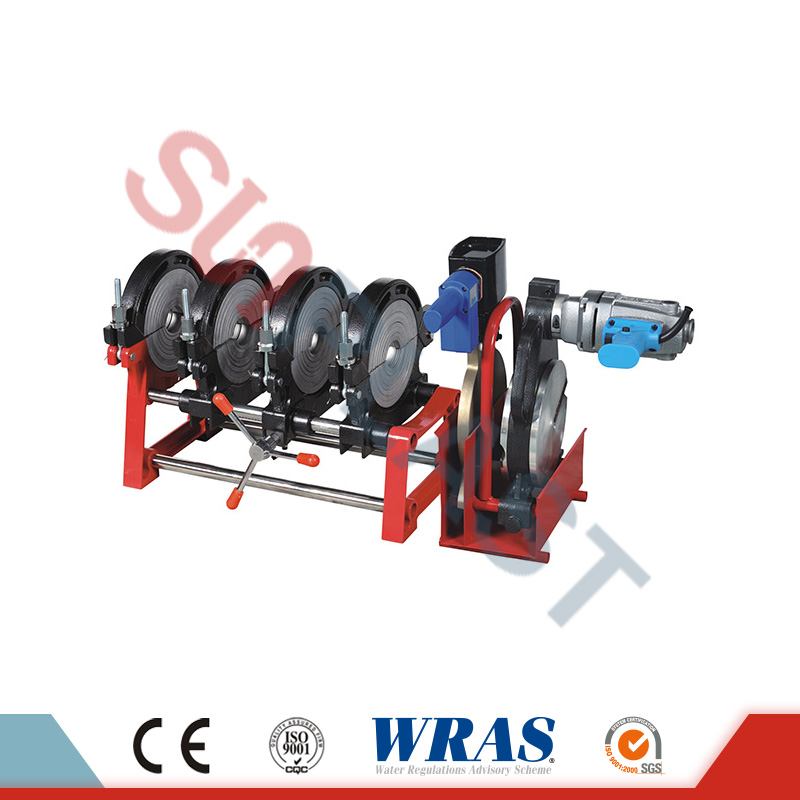
2. What Specific Welding Parameters Are Missed Without Formal Training on HDPE Pipe Welding Machine?
Untrained personnel often ignore three critical parameters: interfacial pressure, heater plate temperature uniformity, and cooling time under pressure. Our HDPE Pipe Welding Machine provides real time data logging, but an operator must interpret the values. For example, if ambient temperature drops below 5°C, the soak time must increase by 20 percent. Without training, no one adjusts the cycle. Another common mistake is misreading the bead roll over measurement. A qualified operator knows that a 2mm bead for 250mm pipe indicates correct pressure, but a thin uneven bead signals underheating. Our factory has developed a parameter card that only trained staff can use. We provide this card with every machine. Ningbo Sunplast Pipe Co., Ltd. also requires that operators demonstrate bead formation on scrap pipe before live installation. The table below shows our recommended baseline parameters from field tests.
| Pipe Diameter (mm) | Heating Time (seconds) | Fusion Pressure (bar) | Cooling Time (minutes) | Acceptable Bead Height (mm) |
| 90 | 80 | 2.8 | 8 | 1.5 2.0 |
| 160 | 120 | 3.5 | 12 | 2.0 2.5 |
| 250 | 180 | 4.8 | 18 | 2.5 3.0 |
| 315 | 220 | 6.0 | 24 | 3.0 3.5 |
Our factory tests confirm that trained operators check heater plate parallelism before every weld. They also clean the pipe ends with isopropyl alcohol, not any random solvent. Using the wrong cleaner leaves residue that weakens molecular bonding. Only certified training covers these details. Ningbo Sunplast Pipe Co., Ltd. has recorded that trained crews finish joints 30 percent faster because they avoid rework. That is a direct saving on labor and material.
3. Why Does Improper Handling of Hydraulic Systems Reduce HDPE Pipe Welding Machine Longevity?
The fusion machine itself suffers when operators are untrained. Our HDPE Pipe Welding Machine contains a hydraulic power unit that requires clean oil and correct pressure settings. Many crews crank the relief valve beyond specification, thinking more pressure makes a stronger weld. In reality, excess pressure extrudes melted plastic outward, creating a cold zone in the center. That hidden defect causes brittle failure months later. Another issue is dragging the machine across gravel roads without retracting the carriage. This bends linear guide rods and ruins alignment. Our factory has rebuilt units that were only six months old due to abusive handling. Trained operators follow the pre start checklist: check oil level, inspect heating faces for residue, verify data logger SD card is present. Sunplast offers a two day hands on course that covers daily maintenance. One of our clients reduced machine repair costs by 70 percent after sending four technicians to our training center. That proves that operator education directly protects your equipment investment.
4. How Can Incorrect Cooling Cycle Management Cause Brittle Fusion Joints?
Cooling is the most rushed phase of HDPE welding, yet it determines long term strength. Untrained operators often remove clamping pressure early to move to the next joint. This creates voids in the crystallized zone. We call this "hot pull" and it is illegal in many gas pipeline standards. Our factory simulation shows that reducing cooling time by only 30 percent lowers impact resistance by half. A trained operator knows that cooling must happen under maintained fusion pressure until the interface temperature drops below 60°C. They use an infrared thermometer to verify. Another mistake is spraying water on the joint to cool faster. This causes differential shrinkage and stress cracking. Our HDPE Pipe Welding Machine includes an automatic countdown timer that locks the hydraulics during cooling. But without training, people disable the timer. Ningbo Sunplast Pipe Co., Ltd. includes a tamper proof log in our latest models that records any early pressure release. This data helps supervisors correct bad habits. The result is a joint that withstands 50 years of service as per ISO 4427.
5. Why Is Documentation and Traceability Essential for Fusion Welding Compliance?
Modern water and gas codes require weld traceability for every joint. An untrained operator does not log parameters correctly, or they fake the data. Our factory has investigated failures where the log showed perfect numbers but the actual weld had contamination. That happens because the operator did not understand how to properly align the pipe ends before starting the cycle. Trained personnel know that the data logger on our HDPE Pipe Welding Machine records drag pressure automatically. If the drag pressure exceeds 5 percent of fusion pressure, the weld is invalid. But without training, the operator simply presses start. Ningbo Sunplast Pipe Co., Ltd. recommends that every fusion crew includes a certified welding inspector. That person verifies that each joint ID matches the daily report. In our experience, trained teams produce complete weld books that pass third party audits easily. Untrained teams face project delays and fines. So training is not just about quality; it is about legal defense.
Frequently Asked Questions: Operator Training for HDPE Pipe Fusion Welding
Answer: Based on our factory curriculum and industry standards, a new operator requires a minimum of 40 hours of supervised hands on training, followed by 20 successful test welds that pass destructive bend testing. The 40 hours should be split into 8 hours of theory (material science, safety, and parameter calculation), 24 hours of machine operation under a certified trainer, and 8 hours of troubleshooting common field issues like cold weather welding or contaminated pipes. After completing this, the operator must demonstrate bead assessment and drag pressure measurement on three different pipe diameters. Ningbo Sunplast Pipe Co., Ltd. also recommends a refresher course every 12 months because fusion standards update. In many local municipalities, untrained operators are not allowed to sign off on joint reports. Without documented training, your warranty claims can be rejected. We have seen that operators who skip the practical hours make the same mistake repeatedly: failing to scrape the oxide layer completely, which leads to low pull force.
Answer: While an experienced plumber understands general piping, HDPE fusion welding requires specific skills not taught in traditional plumbing. The molecular bonding process of polyethylene is completely different from solvent welding PVC or threading steel. Our factory often receives calls from competent plumbers who thought they could learn by watching a YouTube video. They end up with egg shaped beads and cold welds. The most common issue is misinterpreting the "heating time" for different wall thicknesses. A plumber might use the same dwell time for SDR11 and SDR17 pipes, causing incomplete fusion. Formal certification covers how to read the pipe label and adjust the machine accordingly. Additionally, our HDPE Pipe Welding Machine has a safety interlock that requires entering a user code. That code is only given after passing our written exam. Ningbo Sunplast Pipe Co., Ltd. offers a bridge course for experienced plumbers that lasts two days instead of five, but we still require a practical test. Without certification, insurance companies may deny coverage for water damage caused by a failed joint. So on the job learning is risky and not recommended for any critical application.
Final Summary and Call to Action for Professional Fusion Training
To answer the original question: operator training is the single most important factor that determines long term performance of HDPE pipelines. Untrained hands turn advanced equipment into a liability. Our factory has documented that certified operators produce joints with 98 percent fewer defects, reduce machine downtime by half, and extend pipe system life beyond 50 years. Ningbo Sunplast Pipe Co., Ltd. has built its reputation on not only manufacturing robust equipment but also on elevating field skills through hands on programs. Every crew leader should hold a valid training card.