

Why Is Pure Graphite PTFE Packing a Critical Component for Safe Hydrogen Applications?
2026-01-16
In the demanding world of hydrogen handling, from production and storage to fueling and transport, safety and reliability are non-negotiable. Sealing solutions face unique challenges due to hydrogen's small molecular size and propensity for embrittlement. For over two decades, our engineering focus has been on developing packing that meets these extreme demands. Pure Graphite PTFE Packing has emerged as a critical component, and at our factory, we manufacture this advanced material to the highest specifications for global applications.
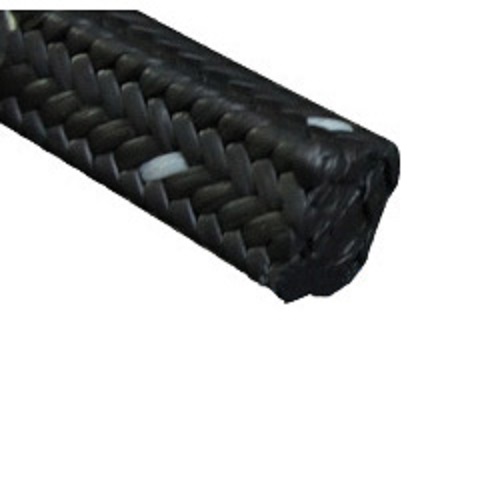
The Hydrogen Sealing Challenge: Why Conventional Packings Fail
Hydrogen molecules are the smallest and lightest of any gas, giving them an exceptional ability to penetrate microscopic gaps in sealing materials. Furthermore, high-pressure hydrogen environments can lead to hydrogen embrittlement, causing certain materials to crack and fail. Conventional braided or elastomeric packings often lack the consistent density and chemical inertness required. They can degrade, leak, or contribute to contamination. This is where the specialized formulation of Pure Graphite PTFE Packing becomes indispensable. Our research and development are dedicated to solving precisely these failure points.
Engineering Excellence: Core Parameters of Our Pure Graphite PTFE Packing
Our factory produces Pure Graphite PTFE Packing by combining high-purity PTFE filaments with premium flake graphite. This creates a homogenous, self-lubricating structure. The graphite fills the micro-porosities of the PTFE, drastically reducing the potential leakage paths for hydrogen. The material exhibits exceptional thermal conductivity, dissipating frictional heat efficiently, and maintains stability across a vast temperature range. Below are the key technical parameters that define our product's performance.
| Parameter | Specification / Value | Benefit for Hydrogen Service |
| Primary Composition | High-purity PTFE fibers, Intercalated Graphite | Chemically inert, resistant to hydrogen attack and embrittlement. |
| Temperature Range | -268°C to +290°C (-450°F to +550°F) | Performs reliably in cryogenic LH2 storage and ambient applications. |
| Pressure Range | Up to 2500 psi (172 bar) and higher with proper gland design | Suitable for high-pressure hydrogen compression and storage systems. |
| pH Range | 0 - 14 | Unaffected by any potential electrolyte in hydrogen production (e.g., in electrolyzers). |
| Thermal Conductivity | High (via graphite network) | Dissipates gland heat, prevents packing degradation and thermal runaway. |
| Emissions & Permeability | Extremely low | Minimizes fugitive hydrogen emissions, enhancing safety and efficiency. |
| Compatibility | Excellent with hydrogen, steam, acids, bases | Versatile for entire hydrogen value chain processes. |
Key Performance Advantages in Hydrogen Systems
The parameters above translate into direct operational benefits. Firstly, the inherent lubricity of both PTFE and graphite minimizes friction and shaft wear, even during dry start-up conditions. This extends the life of both the packing and the rotating equipment. Secondly, the consolidation of our Pure Graphite PTFE Packing creates a uniform seal that adapts well to gland loads, effectively containing the elusive hydrogen molecule. Thirdly, its non-abrasive nature protects expensive pump and valve shafts, a critical consideration for maintenance costs and system integrity. Our quality control ensures every spool meets these performance benchmarks.
Applications Across the Hydrogen Economy
You will find our Pure Graphite PTFE Packing securing safety in numerous hydrogen applications. In hydrogen compressors, it seals rods and pistons under cycling pressures and temperatures. Within electrolyzer stacks, it resists both the chemical environment and the pure hydrogen produced. For cryogenic liquid hydrogen pumps in storage and transport, it remains flexible and sealing at ultra-low temperatures. At hydrogen refueling station dispensers and valves, it ensures leak-free operation for public safety. Our commitment is to provide a reliable sealing component for every link in the clean hydrogen chain. Ningbo Kaxite Sealing Materials Co., Ltd. supports the industry's growth with trusted solutions.
Expert FAQs: Addressing Your Critical Questions
Q1: Why is graphite addition so crucial in PTFE packing for hydrogen?
Pure PTFE alone has a measurable permeability to small gas molecules. The integrated flake graphite particles fill the microscopic voids between PTFE fibers, creating a more tortuous path for hydrogen diffusion. This dramatically reduces the permeation rate, making the composite material effectively sealing for hydrogen applications where zero leakage is a safety imperative. Our manufacturing process ensures even graphite dispersion.
Q2: How does Pure Graphite PTFE Packing prevent hydrogen embrittlement issues?
Hydrogen embrittlement typically affects high-strength metals. Our packing is a composite of chemically inert polymers and carbon. Both PTFE and graphite are non-metallic and inherently resistant to hydrogen infiltration and the subsequent cracking mechanisms that affect susceptible metals. It acts as a protective, stable barrier, shielding metal components like gland followers from direct exposure while also preventing leakage.
Q3: Can this packing be used in both liquid and gaseous hydrogen service?
Yes, one of the standout features of our Pure Graphite PTFE Packing is its wide operational temperature range. It retains its flexibility and sealing properties at the cryogenic temperatures of liquid hydrogen (around -253°C) and also at the elevated temperatures found in compressor discharge areas or near equipment. This versatility simplifies inventory and specification for engineers designing systems that may handle hydrogen in different phases. Ningbo Kaxite Sealing Materials Co., Ltd. provides material validated for both conditions.
Our Commitment to Safety and Quality
In our factory, producing sealing for hydrogen is a responsibility we take with utmost seriousness. Every batch of Pure Graphite PTFE Packing undergoes rigorous testing for density, composition, and performance metrics. We understand that our product is a frontline component in preventing emissions and ensuring system integrity. By choosing a specialized packing designed explicitly for the challenges of hydrogen, operators and engineers make a proactive investment in safety, reliability, and operational efficiency. Contact us, our technical team is dedicated to supporting this vital industry with expertise and proven products.