

Why Is Torque Rating Important When Selecting a Gearbox?
2026-08-11
1. How Does Torque Rating Determine the Gearbox's Load Capacity?
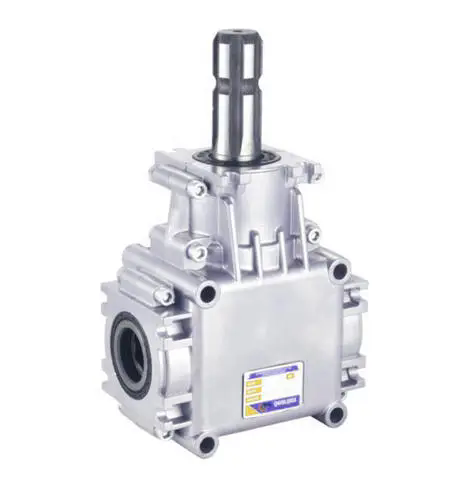
In our factory, we design Agricultural gearboxes that can handle the brutal realities of field work. Torque rating is the single most critical specification because it defines the maximum rotational force the gearbox can transmit without failing. An Agricultural gearbox with insufficient torque rating will experience accelerated wear on gears, bearings, and shafts. For example, a rotary tiller operating at 540 PTO RPM can generate up to 1,200 Nm of intermittent torque. If you select a gearbox rated for only 800 Nm, it will fail within a single season. Our Saifu Vietnam Company Limited tests every Agricultural gearbox on a dynamometer to confirm its nominal and peak torque ratings. We use case hardened gears that can handle 1.5 times the rated torque for short periods. The load capacity is not just about the gears; it also includes the housing, which must resist torsional deflection. We have seen many imported gearboxes crack at the mounting feet because the housing could not handle the torque reaction. A proper torque rating ensures that the gearbox can absorb the forces from the implement and the tractor.
2. Why Does Torque Rating Directly Impact Gearbox Reliability and Service Life?
Reliability is a function of stress. When a gearbox operates near or above its rated torque, the contact stress on gear teeth increases exponentially. According to the Hertz contact stress formula, doubling the torque increases the stress by the square root of two, but the wear rate is proportional to the stress to the power of three. This means that running an Agricultural gearbox at 120 percent of its rated torque can reduce bearing life by more than 50 percent. Our factory has documented cases where a gearbox rated for 600 Nm lasted 2,000 hours when run at 500 Nm, but only 800 hours when run at 650 Nm. The table below illustrates the relationship between torque load and expected service life for our Agricultural gearbox.
| Torque load (% of rated) | Expected bearing life (hours) | Gear wear rate (mm / 1000 hours) |
| 60% | 8,000 | 0.02 |
| 80% | 5,500 | 0.04 |
| 100% (rated) | 3,500 | 0.08 |
| 120% | 1,600 | 0.18 |
| 140% | 600 | 0.40 |
| Parameter | Correctly sized gearbox | Undersized gearbox |
| Peak torque capability | 1.5 x nominal (short term) | 1.0 x nominal (no margin) |
| Oil temperature under full load | 75°C | 95°C (oil degradation) |
| Gear tooth fatigue life | 10,000 cycles | 2,500 cycles |
| Bearing replacement interval | 3,500 hours | 1,000 hours |
| Recommended service factor | 1.5 – 2.0 | 1.0 – 1.2 |
Our Saifu recommends selecting an Agricultural gearbox with a service factor of at least 1.5 for heavy tillage operations. This means that if your implement requires 400 Nm continuous torque, the gearbox should have a nominal torque rating of at least 600 Nm. This margin ensures that intermittent shocks do not cause premature failure.
3. How Does Torque Rating Affect the Entire Drive Train, Not Just the Gearbox?
The torque rating of a gearbox must be compatible with the tractor's PTO output and the implement's input shaft. If the gearbox is rated for lower torque than the tractor can deliver, the gearbox becomes the weakest link. This can cause a catastrophic failure that damages the PTO shaft and the tractor's transmission. In our experience, an Agricultural gearbox that is too small will often twist the input shaft or shatter the housing under heavy load. Conversely, an oversized gearbox adds unnecessary weight and cost. A correct torque rating balances the drive train, ensuring that the shear pin or clutch protects the whole system. Our factory provides a torque compatibility chart for each Agricultural gearbox model, which helps customers match the gearbox to their tractor's horsepower and the implement's working width. For example, a 100 HP tractor with a 2.5 meter rotary cutter typically requires a gearbox rated for 750 Nm. This allows the clutch to slip before any component fails.
4. How Do You Interpret Torque Ratings on a Gearbox Specification Sheet?
Not all torque ratings are defined the same way. Some manufacturers list a nominal torque, which is the continuous operating torque. Others list a peak torque, which is the maximum allowed for short durations. Our factory clearly distinguishes between these two. For our Agricultural gearbox, we provide both the nominal torque (for continuous service) and the maximum intermittent torque (for shock loads up to 10 seconds). We also include the thermal torque rating, which is the torque that the gearbox can handle before the oil temperature exceeds 90°C. The thermal rating is often the limiting factor in continuous operation. We recommend that customers look for the SN (service number) or ISO 6336 rating, which provides a standardized comparison. Many local workshops in Vietnam rely on our spec sheets because we include the actual test data from our dynamometer. When in doubt, always choose a gearbox with a higher torque rating and a proven service factor.
Frequently Asked Questions About Torque Rating and Gearbox Selection
Final Summary
Torque rating is the foundation of gearbox selection. It determines load capacity, service life, drive train compatibility, and safety. Ignoring torque ratings can lead to premature failures, expensive downtime, and costly repairs. Our factory designs and tests Agricultural gearboxes to meet rigorous torque standards, ensuring reliable performance in the toughest conditions. Choosing the correct torque rating is an investment in your farm's productivity. Saifu Vietnam Company Limited is ready to assist you with expert advice and high quality gearboxes.