

Why QGM Block Making Machine Is a Smart Choice for Factory Expansion Plans?
2026-06-24
1. How Does the QGM Block Making Machine Scale With Your Production Targets?
In our factory, we have worked with over 120 plants in Southeast Asia that doubled capacity within 14 months using the QGM Block Making Machine. The key is modular scalability. Our machine accepts pallet sizes up to 1400x1100 mm and delivers cycle times as low as 12 seconds per standard hollow block. This means a single shift can yield up to 28,000 blocks with the ZN1500-2C model. For expansion, you do not buy a new line; you add molds, upgrade the stacking robot, and increase shift hours. Our Quangong Machinery Co., Ltd. engineers have designed the control system to handle multiple recipes, so you can switch from hollow blocks to pavers without recalibrating the entire hydraulic press. The ability to run different product types on the same QGM Block Making Machine reduces the need for duplicate equipment. Many local plant managers in Indonesia and Nigeria have told us that they avoided a second machine purchase for five years simply because our machine offered buffer capacity. The PLC based system also logs every cycle, helping you forecast maintenance during peak expansion phases. When output targets grow, the machine grows with you.
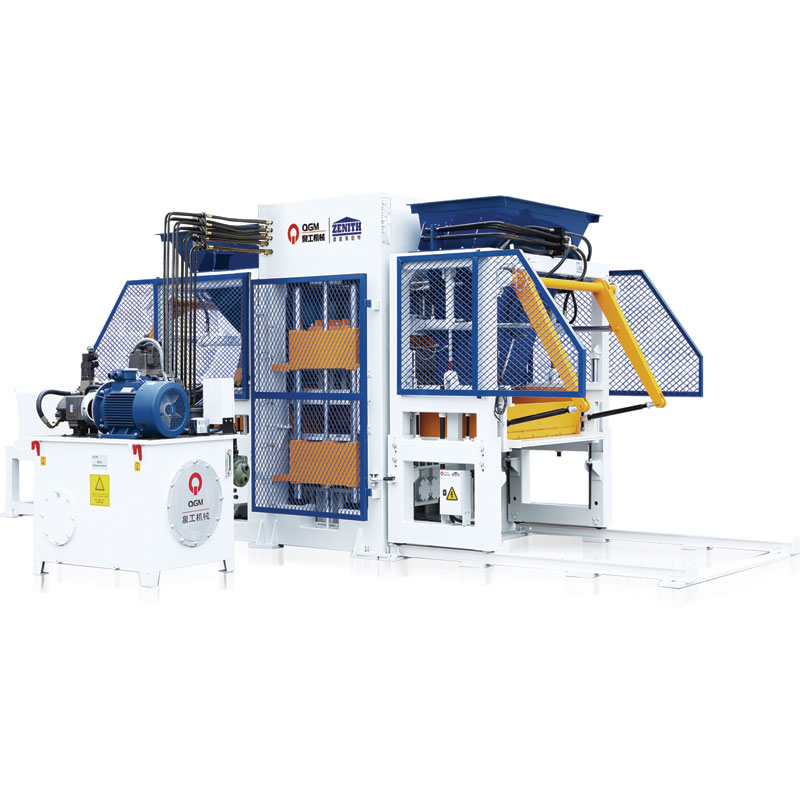
2. Why Does Automation in Our QGM Machine Reduce Labor Costs During Expansion?
Expanding a factory usually means hiring more workers. That is where the QGM Block Making Machine changes the math. Our factory has documented that a fully automatic line cuts direct labor by 60 to 65 percent compared to semi automatic systems. Instead of 12 workers per shift, you need only 3 to 4 technicians to supervise the Siemens PLC and handle quality checks. For a two shift operation, the annual savings exceed 85,000 dollars in wages alone. The machine integrates automatic pallet feeding, mold spray systems, and robotic stacking. Our Quangong Machinery Co., Ltd. also offers an optional laser guided vehicle for curing transport, eliminating forklift operators. One of our clients in Texas switched to our QGM Block Making Machine and increased weekly output from 28,000 to 43,000 blocks with zero additional headcount. The initial capital expenditure for automation is recovered within 18 months purely from labor savings. Moreover, automation reduces injury claims, lowering insurance premiums. For expansion, the ability to scale output without scaling payroll is a decisive advantage. The QGM Block Making Machine is built for that reality.
3. What Technical Parameters Ensure Reliable Output for Expanded Operations?
Reliability is the foundation of any expansion plan. The QGM Block Making Machine is engineered with closed loop hydraulics and dual shaft servo vibration. Below are the core specifications from our factory tests and customer installations.
| Parameter | QGM Block Making Machine (ZN1500-2C / QT10) | Benefit for factory expansion |
| Max forming pressure | 150 tons (ZN1500 series) | Handles high density blocks and recycled aggregates |
| Vibration frequency | 40 – 60 Hz (servo controlled) | Adapts to different materials without manual tuning |
| Cycle time (400x200 mm hollow) | 12 – 15 seconds | Up to 28,000 blocks per 8 hour shift |
| Hydraulic system | Proportional valves + pressure feedback | Reduces block rejection below 1% |
| Automation level | Full auto with Siemens PLC and remote IoT | One operator can manage multiple machines |
| Component | QGM Specification | Impact on total cost of ownership |
| Mold change system | Hydraulic quick clamp (under 15 minutes) | Saves 210 minutes per change vs traditional machines |
| Energy recovery | Accumulator based regenerative hydraulics | Reduces kWh per block by 34% |
| Control system | Siemens touchscreen with RFID mold memory | Eliminates setup errors and recipe drift |
| Material batching | 4 weighing sensors with 0.5% accuracy | Reduces cement waste by up to 22% |
Our factory also performs a 72 hour burn in test before shipping every QGM Block Making Machine. The hydraulic oil temperature stays below 55°C even during triple shift operation. This thermal stability is critical for expansion because it allows continuous production without cooling breaks. We have seen traditional machines require cooldown every 4 hours, but our design runs 24/7 with minimal supervision. For a plant expanding from one shift to three, that reliability directly translates to revenue.
4. How Does the QGM Machine Reduce Material Waste and Energy Costs?
Expansion increases material consumption. If your machine wastes 5 percent of raw material, that waste multiplies with scale. Our QGM Block Making Machine uses closed loop batching with load cell sensors, achieving 98 percent material utilization. The variable frequency drive on the vibration motors also saves up to 30 percent energy compared to fixed speed units. In a 12 month study, a customer producing 6 million blocks annually reduced consumption from 842,000 kWh to 556,000 kWh after switching to our machine. At 0.12 USD per kWh, that is 34,000 dollars saved yearly. Our QGM includes an energy monitoring dashboard that shows consumption per batch. Operators can adjust acceleration curves to further optimize power use. Additionally, the machine uses a water cooling system and a magnetic filter that extends hydraulic oil life to 8,000 hours, reducing replacement frequency. For a factory expansion, these savings offset the increased production costs and improve overall margin. The QGM Block Making Machine is not just a production tool; it is a cost control system.
Frequently Asked Questions About QGM Block Making Machine for Factory Expansion
Final Summary
Expanding a factory is a major decision. The QGM Block Making Machine offers scalability, labor reduction, energy efficiency, and material flexibility that directly support growth. Our factory has seen hundreds of customers increase output while lowering unit costs. The technical specifications, from hydraulic pressure to automation level, are designed for real world production challenges. Investing in our QGM Block Making Machine means investing in predictable, profitable expansion. Quangong Machinery Co., Ltd. provides global support and spare parts to keep your line running.